


Latest
  • visit www.artsghana.org for information on the arts
  • visit www.artsghana.org for information on the arts

Arts Ghana

MENU
  • Home
  • About Us
  • Upcoming Events
  • Latest News
  • Artistes Database
  • Archives
  • Links
  • Contact Us
  • Music
  • Dance
  • Theatre
  • Literature
  • Visual Arts
  • Film
  • Fashion
  • You Tube
  • Facebook
  • September 19, 2021 • 76

    Politically charged performance at CNC

  • September 12, 2021 • 111

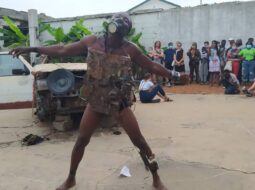
    Performative art marks Chale Wote Festival

  • September 5, 2021 • 146

    Post-colonial African dynamism under re-examination

  • August 29, 2021 • 146

    “Sound Out” exhibition ends in Accra

  • August 22, 2021 • 186

    Australia based Ghanaian musician creates waves

  • August 8, 2021 • 263

    Film showcases richness and diversity of Asante Culture

  • August 1, 2021 • 239

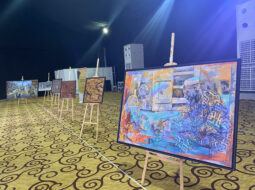
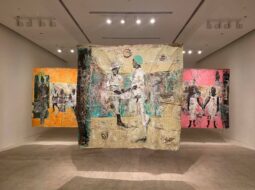
    Stitched canvasses evoke metaphors and symbolism

  • July 18, 2021 • 266

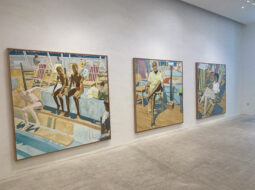
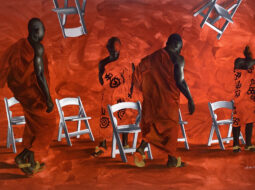
    Chairs take center-stage at Gallery 1957

  • July 11, 2021 • 322

    Kofi Antubam in reminiscence

  • July 4, 2021 • 290

    Cooperative Market opens at Goethe-Institut

  • Ghanaian rhythms on the Nissum Fjord in Denmark

    September 21, 2013 • News • 3615

    African Footprint International, a Ghanaian music and dance group last week performed on several speedboats and harbors on the Nissum Fjord, located on the western coast of Denmark.

    Currently on a performance tour of Denmark and other European countries, the group boarded a huge wooden boat and headed out to sea amidst loud rhythms from several Ghanaian traditional drums, bells and rattles.

    As they returned to the harbor, a Danish regimental band played patriotic music as a crowd from nearby villages and towns stood in eerie silence as tune after tune unfolded with meticulous timing.

    Back on land, African Footprint took over with their variations of several traditional music and dance pieces alongside wild tempos from fontonfrom, and atumpan – as well as a balafon, which was played by a Burkinabe musician.

    The performance, which included a march with burning torches, church services, ballet dance, choral music and poetry recitals, was repeated in five different harbors. It was aimed at creating cultural activities and bringing the issue of nature and the environment to the forefront.

    Led by Samuel Kweku Addison, a Ghanaian praise and worship song was introduced to members of a protestant church, who joined and clapped their hands the Ghanaian charismatic style.

    Nissum Fjord covers an area of 70 sq. It is situated behind a huge mass of land that is 13 km long. It is 1,200 m wide but is quite narrow is some in places measuring only 200 m in width.

    The Fjord’s Network and the town of Thorsminde organized the programme with artistic direction by Frans Winther and Pierangelo Pompa from the Odin Theatre.

    The Danish tour by African Footprint is being made possible by the kind courtesy of Godsbanen, Royal Academy of Music (Aarhus), Addison’s Mighty Works Aps, Keld Hosbond, Klejtrup Musikefterskole, Den Rytmiske Højeskole, Shanghai Akademi, Sydjurs Musikskole, Brandbjerg Højskole and www.artsghana.org.

    Read More »
  • Kusasi traditional house in Dutch Museum

    September 21, 2013 • News • 5458

    Cool but persistent winds blow as my friend, who has a wealth of knowledge of Africa, eases the small Toyota car out of a driveway in the Dutch town of Tilburg.

    As we hit the highway, vast rows of unending farmlands and artificial forests literally follow each other – I wonder when Ghana would have such a capacity in Agriculture to feed its millions and the ability to replace its lost foliage.

    We move east towards the city of health, business and knowledge -Nijmegen. I am anxious of what to expect as we get close to our destination - the Afrika Museum, located in between the famous seven hills of Berg en Dal.

    At the entrance, a giant poster attracts my attention, as I get close I notice a photograph of a traditional Kusasi building. Anxiety quickly turns to curiosity - as my long fascination with Kusasi architecture is rekindled.

    I make a decision to move to the Ghanaian village section of the outdoor museum where I encounter a Kusasi house constructed through a hands-on collaboration between its kinsmen and Dutch architects.

    Largely found in the savannah highlands of Northern Ghana, Kusasi architecture is a tranquil collection of conical and quadrangular huts with open courtyards and straw roofs joined together in a loop with rooms for diverse purposes.

    It is complete with metal/clay pots, grinding stones, mortars, pestles, furniture, firewood, clothes, shovels, pick axes, hoes, colorfully decorated metal basins and other household items.

    Although familiar with Kusasi houses, I must confess it is the first time I have the opportunity to take a detailed look - I take a calculated walk from room to room while observing its intricately positioned windows, doors and thatched roof.

    Apart from the weather (21 degrees), I am encircled by an unruffled feeling of being in Northern Ghana - as I wonder why there is no museum of architecture in Ghana - a question that I guess will still be relevant throughout my life.

    It is a challenge to the Ghana Institute of Architects and other related bodies to help create models of Ghanaian traditional, colonial and postcolonial architecture, which are fast disappearing owing to regular demolitions for “modern” buildings.

    Suddenly, I hear sweet rhythms from a kora player – as I move in the direction of the sound, yet another interesting site confronts me - an African chop bar and a Malian kora master Zoumana Diarra, who gracefully honoured me with a few highlife tunes from a box guitar. Sadly, I did not find tuo zafi, fufu and pito.

    Founded in 1954, the museum also boasts of models of architecture from Lesotho, Benin, Cameroon and the Dogon of Mali nestled in between vegetables gardens, wells, colourful wooden kiosks, traditional silos and playgrounds.

    The indoor museum is without doubt one of the few with a specific focus of collecting and showing modern art from Africa. It features semi permanent exhibitions, which themes such as religion and society.

    As I leave the Museum, I take a final glance at the Kusasi house not sure whether my feelings are of jealousy, elation or both – my only consolation, however is a dream – perhaps a fantasy to see some transformation at the vast grounds of the National Museum in Accra.

    By John Owoo in Nijmegen - Holland
    Pictures by Karla Hoffman

    Read More »
  • Ghanaian, Kenyan and Danish artistes in a compelling performance

    September 20, 2013 • News • 2453

    Fusion of diverse musical cultures is not new but it can be quite dramatic, vivid and intense – especially when an adventurous group of artistes from several countries decide to let off their creative impulses.

    Apart from its ability to captivate and surprise, cross-cultural collaborations reveal the beauty, variety and diversity of creative works by people with varied backgrounds.

    I feel a subtle sense of anxiety from the audience as members of African Footprint International (AFI) move onto the stage at Godsbanen, a theatre located in downtown Aarhus, the second city of Denmark.

    The apprehension from the audience is comprehensible – as musicians, dancers and acrobats in colourful costumes from Ghana, Burkina Faso, Kenya, Australia and Denmark proceed in unison - amidst pounding beats from giant fontonfrom drums.

    “I am not sure of what to expect but I guess it will be memorable – the hand crafted drums are obviously artworks in themselves. The kora will definitely support the playing of cross rhythms”, says Dorthe Nielsen, a violinist in Aarhus.

    Refreshing rhythms from the Kora tenderly fills the air while atumpan, kpanlogo, balafon, guitars, kidi, kete, djembe, bells and rattles join in harmony as vocals from two Danish singers cut through the air with immense passion.

    Traditional / vertical dancers, aerial performers on hanging fabrics alongside Kenyan acrobats set the theatre ablaze with a spectacular performance. They suspend, fall, swing and twist their bodies in various deft maneuvers amidst cheers from the capacity audience.

    Ovations flow as acclaimed Danish trombonists, guitarists and drummers join the group. Comprising Karsten Aaholm, Keld Hosbond, Mogens Thorborg, Frank Bastrup Olsen, Nicolaj Pedersen and Rasmus Kristiansen, they simply electrify the theatre with their instrumental expertise.

    “Absolutely fanciful to see four experienced trombonists on stage – and interestingly, they are performing with African artistes. I was overwhelmed by the calmness of trombones, therapeutic power of the kora and the softness of drum beats”, adds Jens Enggaard, an architect from the capital Copenhagen.

    “A fantastic show that has a wide variety of fast moving scenes to satisfy everybody – I never lost concentration for a moment – I will surely like to see it again, concludes Kirsten Kester, a lecturer / consultant in Aarhus.

    Put together by multi instrumentalist Samuel Kweku Addison with support from UK based guitar dynamo Kwame Yeboah, the show is a piece of artwork that creates room for distinct artistes and a huge allowance for improvisations and experiments.

    The Danish tour by AFI is being made possible by the kind courtesy of Godsbanen, Royal Academy of Music (Aarhus), Addison’s Mighty Works Aps, Keld Hosbond, Klejtrup Musikefterskole, Den Rytmiske Højeskole, Shanghai Akademi, Sydjurs Musikskole, Brandbjerg Højskole and www.artsghana.org.

    Pictures by Jacob Crawfurd

    Read More »
  • Youthful bands showcase Northern Ghanaian rhythms in Tamale

    September 20, 2013 • News • 3760

    The power, beauty and complexity of traditional musical resources from Northern Ghana overwhelm the Youth Home Centre in Tamale as four youthful bands perform to wild cheers.

    A cool evening breeze, which constantly sway the leaves of trees that surround the venue, equally seem to carry rhythms from the festival grounds to the leafy environs of the Youth Home Centre.

    Youth Home Band eventually win the competition, which is characterized by a bold attempt to effectively fuse diverse Northern rhythms with highlife, jazz, funk, soul, reggae and afro beat among others to create a new synthesis.

    Clad in colourful costumes, the groups exhibit showmanship as they struggle to impress the judges, which comprise Selorm Agra (music tutor, Bagabaga Training College), Fuzzy Kombatt (former director of CNC Tamale), Delali Alormenu and (former MUSIGA NR chairman) among others.

    Bizung, North Wings and Bright Stars bands took the 2nd, 3rd and 4th positions in the competition, which encourage the extension of local rhythms to their contemporary levels.

    Polyrhythmic patterns coupled with ancient praise singing traditions from Northern Ghana surprise the judges who commend the groups for their efforts while admonishing them to continue training and rehearsals.

    Despite the apparent lack of harmony and effective blending of local /western instruments, which characterized performances by all groups, the attempt to harness and make use of Northern Ghanaian rhythms in a contemporary vein appears to be in full swing.

    A pursuit when fully achieved is likely to result in a subtle musical approach that stand at the interface of tradition and modernity thereby sowing the seeds for full-blown innovative musical creations from the North.

    Goethe-Institut Ghana supported the festival, which was organized by the Institute for Music and Development in partnership with Arterial Network Ghana.


    Read More »
  • African Footprint mesmerize audience at Folklore Festival

    August 30, 2013 • FeaturedArticle, News • 4031

    A dramatic fusion of the elements of Kpanlogo, Kundum, Bawa, Sikyi and Gahu by African Footprint International, last week received a loud applause at the Alsion Theatre in Sønderborg, Denmark.

    In a magnetic performance, which forms part of the 2013 edition of the Triangle Folklore Festival, the group showcased the variety and beauty of traditional Ghanaian dance and music that have been effectively blended with components of Danish music.

    With a cool blend of loud Ghanaian percussive instruments alongside guitars and remarkable voices from Danish musicians Mette Marie Jensen Ørnstrup / Mette Bak Nielsen, the group managed to capture the attention of the largely elderly audience, who cut in with intermittent applause.

    Directed by Samuel Addison with Jens Pieter on guitar, Abraham Mensah on percussion alongside Kenyan acrobats, the production, which dilates on courtship, love, childbirth, religion and conflict is highly memorable.

    Undeniably, it unfolded as a kind of snowballing manuscript that point to custom and culture as well as hints of history while recalling ancient story-telling traditions of Ghana.

    Highly expressive / well-coordinated movements and infectious rhythms coupled with intense energy from the stage created an atmosphere of an African celebration, said Mia Perdesen, an anthropologist in Sønderborg.

    “It was interesting to see Danish musicians on stage with their Ghanaian colleagues – what an amazing cross cultural collaboration”, added Brit Hansen, a musician / dancer from the capital Copenhagen.

    Triangle Folklore Festival, which began in 1995, has witnessed the participation of fantastic folklore groups from all over the world. They have filled public squares in various cities with colourful folklore performances, which has been a great pleasure to the local people.

    Several groups from Slovakia, Ukraine, France, Serbia, Lithuania, Turkey, Canada, Indonesia, Denmark and the Basque Country participated in Triangle Folklore Festival 2013.

    A multi national group based in Cape Coast, African Footprint International is renowned for a subtle use of Ghanaian traditional rhythms, which they strikingly blend with western beats to create a new fusion that has captivated audiences in Europe, the United States and other parts of Africa.

    Godsbanen, Royal Academy of Music (Århus), Addison’s Mighty Works Apps, African Footprint Legends, Keld Hosbond, Klejtrup Musikefterskole, Den Rytmiske Højeskole, Shanghai Akademi, Sydjurs Musikskole, Brandbjerg Højskole and www.artsghana.com are supporting the tour of Denmark.

    By John Owoo
    Sønderborg - Denmark

    Read More »
« 1 … 26 27 28

Subscribe to Arts Ghana News

Enter your email address to subscribe. Receive notifications of new posts by email.

RECENT VIDEOS

Simple Slideshow

  • Alliance Française
  • Arterial Network

© 2021 Arts Ghana™

Website Developed by Creative Solutions