
Latest
  • visit www.artsghana.org for information on the arts
  • visit www.artsghana.org for information on the arts

Arts Ghana

MENU
  • Home
  • About Us
  • Upcoming Events
  • Latest News
  • Artistes Database
  • Archives
  • Links
  • Contact Us
  • Music
  • Dance
  • Theatre
  • Literature
  • Visual Arts
  • Film
  • Fashion
  • You Tube
  • Facebook
  • September 19, 2021 • 73

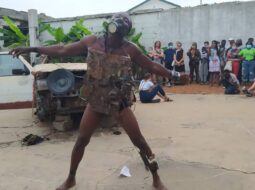
    Politically charged performance at CNC

  • September 12, 2021 • 109

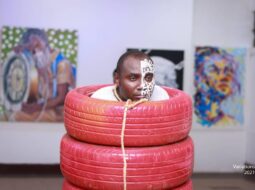
    Performative art marks Chale Wote Festival

  • September 5, 2021 • 144

    Post-colonial African dynamism under re-examination

  • August 29, 2021 • 143

    “Sound Out” exhibition ends in Accra

  • August 22, 2021 • 182

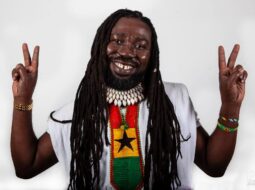
    Australia based Ghanaian musician creates waves

  • August 8, 2021 • 261

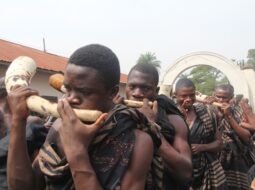
    Film showcases richness and diversity of Asante Culture

  • August 1, 2021 • 238

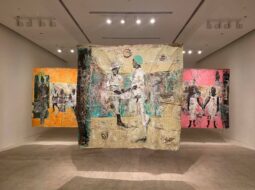
    Stitched canvasses evoke metaphors and symbolism

  • July 18, 2021 • 264

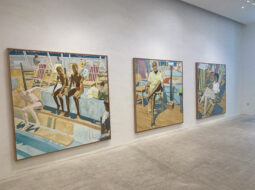
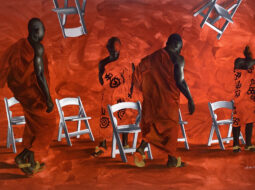
    Chairs take center-stage at Gallery 1957

  • July 11, 2021 • 321

    Kofi Antubam in reminiscence

  • July 4, 2021 • 287

    Cooperative Market opens at Goethe-Institut

  • Dance Drama demystifies International Criminal Court

    January 11, 2015 • FeaturedArticle, News • 41911

    Focus on the International Criminal Court, which has jurisdiction to prosecute individuals for genocide, crimes against humanity and war crimes, was during the holidays momentarily transferred onto a stage at the Goethe-Institut in Accra.

    In a rather informative / educative dance drama, several issues relating to its establishment, composition, operation, people who have appeared before it as well as people who have been indicted were imperceptibly relayed to the audience, who appeared glued to their seats.

    Directed by German choreographer Monika Gintersdorfer and visual artist Knut Klaßen, the piece, which is also titled “International Criminal Court”, did not take a position but ensured the free flow of diverse opinions, comments, critiques and even judgments out of the stage.

    Gintersdorfer, who has expressed a restrained resistance to empty pomp and superficial entertainment in this piece - employed the use of commando style and other movements by a multi racial cast - as scenes from the court were virtually “paraded” before the audience in theatrical / poetic technique.

    Alongside virtuoso monologues / dialogues that contain a sparkling mixture of humor / intelligence, the piece although intended as an investigation into the activities of the International Criminal Court, eventually reached out as a politico/legal piece that exposed the hidden richness of works by Gintersdorder, who is noted for other formidable productions.

    Taking into account other trials (including trial by ordeals), “The International Criminal Court” explored the authenticity of the real court in the Dutch city of The Hague and its aims through an effective alternation of speech and dance. Undeniably, the production equally ended up as an incisive piece on the tension between idealism and practice.

    An effervescent and dynamic choreographer, Gintersdorfer is spurred on by a different purpose. As one of Germany’s most physical, border-crossing directors, her motivation is not to document alone - in the sense of repeating the original event - but rather to provoke and pose questions.

    And she did succeed in posing several questions - why are mostly African leaders on trial, is the court an appropriate forum, will it lead to justice for all, will it help curb the incidence of genocide or war crimes among others – questions that time and history will one day help us answer.

    Theater Bremen, Kulturstiftung des Bundes and Goethe-Institut in Ghana sponsored the performance.

    By John Owoo
    (Accra)
    Read More »
  • Historic Ghanaian Artworks on Display

    January 5, 2015 • FeaturedArticle, News • 6022


    Although the history of fine art in Ghana can be traced to the Neolithic period of the Stone Age (circa 8,000 BC), most Ghanaians have not had the opportunity to experience some of these artworks.

    Nevertheless, selected works from the collection of the National Museum and Monuments Board dating from the 1940s to the 90s are currently on show at the premises of the Museum in Accra.

    Artists whose works are on display include Prof E.V. Asihene, Dr. Kobina Buucknor, Amon Kotei, Kofi Antubam, A.O. Bartemeus, J.C.O. Okyere, E. Owusu Dartey, Emmanuel Addo Osafo, F.A. Gyampoh, J.D. Okae, Kwame Wiafe Debra, Grace Salome Kwami, E.L. Asa Anakwa, Philip Amonoo, Prof Ablade Glover and Prof Ato Delaquis.

    The images, which are characterized by huge traditional underpinnings, recall pristine landscapes / forests, chronicles of culture, superstition, glamorizing Ghanaian cultural practices and beauty / ingenuity of the African woman.

    In a lecture that heralded the opening of the exhibition, Prof Kojo Fosu (Department of Art Education, University of Education, Winneba), delivered a historical overview of the art scene in Ghana with emphasis on the various stages that range from the Stone Age to New Experiments.

    Quoting extensively from academic literature, Prof Fosu noted that by the turn of the 10th Century AD, major ethnic groups of migrating Africans who later consolidated their positions into ethnic states, empires and kingdoms, eventually produced standard artistic works of long standing historical significance.

    “Sculpture was practiced mostly in forest sectors of the country for the interpretation of reality in nature, rather than copying for the exactness of nature”, said Prof Fosu, who has authored a number of books and other publications on art.

    “The art of mural painting on the other hand continued as wall decorations on some palaces and shrines in several areas in the country. However, in the upper savannah (East), mural painting was practiced by female artists to decorate homes to raise social status of husbands as well as enliven palaces, shrines and communities” he added.

    Touching on contemporary art in Ghana, Prof Fosu said Ghana has experienced varied interactions with foreign adventurers, slave raiders colonial exploiters and education architects – a move which has progressively evolved into a diverse cross cultural contemporary art tradition.

    He dilated on the development of a unique hybrid of cross cultural contemporary art tradition, which he described as being the result of a cool blend of European art conventions of academic realism, proportions and perspectives with African ethnic art traditions of disproportions, stylizations and exaggerations.

    “The harmonious blending of these three styles meant that the emerging new Ghanaian contemporary art of realism, often times composed in cultural narratives to romanticize and idealize Ghanaian customary practices, simultaneously displayed disproportionate features”, revealed Prof Fosu.

    “The approach developed into an artistic style, which allowed the mode of its aesthetic appreciation to rely on both its intrinsic quality and contextual value”, he added.

    The exhibition, which ends in March 2015, also witnessed a live painting by Prof Ablade Glover, Director of the Artists Alliance Gallery (Accra) and a former Dean of Students at the College of Art, Kwame Nkrumah University of Science and Technology (Kumasi).

    By John Owoo
    (Accra)

    Read More »
  • Art – Ghanaian women show class

    December 29, 2014 • FeaturedArticle, News • 3363

    A display of works by ten women spanning three generations with influences from international styles and regional traditions ended recently at the Loom Gallery in Accra.

    Undoubtedly a landmark exhibition featuring highly creative women with ages ranging from 34 to 97, it equally signified the contributions of Ghanaian women to fine art since the struggles of feminist art movements in the late 1960s and 70s.

    Artists with works on display are Araba Kromantin, Theodosia Okoh, Kati Torda, Marigold Akufo Addo, Kate Badoe, Betty Acquah, Constance Swaniker, Nana Amu, Adwoa Amoah and Fatric Beowng.

    A graduate of the Slade School of Art (UK), coarse squares by Marigold Akufo Addo tend to sparkle like trimmings while recalling the ever-changing nature of our landscapes. Her thin lines, which are often realized in gold, stand side by side with transcultural ideographs.

    Trained at the College of Art, Kwame Nkrumah University of Science and Technology, Fatric Bewong’s acrylic paintings on canvas are fiery and quite energetic. Alongside textured colors, she freely condenses the passions and energies that she effectively captures on her canvas.

    Currently the president of Foundation for Contemporary Art Ghana, works by Adwoa Amoah make successful forays into explorations of the human eye. Indeed, the eye becomes the centre of attraction despite the presence of other facial features.

    Currently based in the United States, Kate Badoe’s work is definitely on the contemporary tip – but with its heart firmly embedded in the rich traditions of Africa. Indeed her lines, curves and dots alongside representational combs create harmony with ancient and current practices.

    Educated at Reading (UK) and Columbia (USA) Universities, works by Kromantin, who is originally from Jamaica, evoke fond memories of market scenes and erotic flowers that suggest mankind’s lost intimacy with nature.

    Best known for designing the Ghanaian flag, Theodosia Okoh appears to have talent to spare. Undeniably, her works make an interesting foray into delicate collages that employ corn stalks to create replicas of huge public buildings and castles.

    With temperatures soaring to 32 degrees Celsius over the past few weeks in Accra, the exhibition, which also marked the 45th anniversary of the Loom Gallery, without doubt brought some relief for art lovers in the city.

    By John Owoo
    (In Accra)

    Pictures - Michael Nortei Lokko

    Read More »
  • Creative Sector Advocacy Workshop Underway in Winneba

    November 24, 2014 • FeaturedArticle, News • 5078

    By John Owoo
    At large in Winneba

    A four-day workshop that aims at advocating for the update of the Creative Sector Medium Term Development Plan in order to ensure it gets inline with the 2014-2017 Ghana Shared Growth and Development Agenda is currently underway in the Central regional town of Winneba.

    Organized by the Institute for Music and Development, Ghana Culture Forum and Arterial Network Ghana Chapter, the workshop is also meant to create a conducive policy environment for the creative industries through facilitation and implementation of the Creative Sector Medium Term Strategy by 2015.

    Supported by BUSAC Fund, DANIDA, International Development Cooperation, USAID and the European Union, the long-term goal is to pave the way for the development of infrastructure that would accelerate the role of the sector in terms of cultural expression and contributions to the economy.

    “Our venture is to mainstream arts and culture in national development. Indeed, culture has been very much peripheral and it’s actually considered as an after thought when we contemplate issues relating to development”, said Akunu Dake, Vice Chairman of the Ghana Culture Forum.

    “The creative industry is one of the fastest developing sectors in international trade and economics. This workshop is therefore also targeted at equipping practitioners of the industry to sharpen their skills while ensuring excellence in their undertakings”, added Dake, who is also the CEO of Heritage Development, a consultancy firm based in Accra.

    Activities lined up for discussion include introduction to advocacy, effects of regulation on private sector, advocacy and enabling business environment, tools and techniques of effective advocacy, negotiation skills, dialogue and consultations among others.

    Hon. Dzifa Abla Gomashie, the Deputy Minster of Tourism, Culture and Creative Sector, officially opened the workshop.

    Read More »
  • Father And Son of Afrobeat In Copenhagen

    November 10, 2014 • Featured, News • 2076

    Global, a world music venue in Copenhagen (Denmark) was packed to capacity, the audience standing shoulder to shoulder as Seun Kuti, the youngest son of Afrobeat King, Fela Kuti, mounted the stage with his father’s band, Egypt ’80, during a recent concert.

    Bandleader and sax-player Baba Ani, got the night underway with a tune from his own compositions whilst introducing the musicians who have played together for over three decades, as Seun remained backstage. When Seun Kuti stepped forward with his saxophone playing “VIP”, one of his father’s songs in a tribute, the audience roared to welcome him. Following up quickly with tracks from his current album “A Long way to the Beginning”, the audience yelled for more.

    At this juncture, Seun responded with a 10 minute speech on social injustice in society before playing a tune he calls “IMF”, lambasting international financial institutions, quite similar to the lyrics from his father’s song “ITT) (International Thief Thief).

    With two female backing singers wriggling their waists to the rhythm, Seun played ”African Airways”, ”Kalakuta Boy”, ”African Smoke” and ”Black Woman”, (among others), a song he dedicates not only to African women but also all women around the word.

    Introducing ”Finding Fela”, a documentary on the life of his father, which premiered at Empire Bio, in the Nørrebro district in the Danish capital, few hours before his concert, Seun said, “Fela’s life had many layers which cannot all be captured in a hundred minute film”.

    Seun and his brother Femi are the two commercially successful musical offspring of the late Nigerian Afrobeat innovator Fela Kuti. At the age of nine Seun expressed the wish to sing to his father. A short while later Seun started performing with his father and the band. Since then, he has followed the political and social ethos of his father.

    After Fela died in 1997, Seun, then only 14 years old, became the lead singer of Egypt 80. While in school Seun had to choose between a career in music and one in football for which he has an outstanding talent. He honed his musical skills for several years. Those skills were showcased to the world with his 2008 debut album, Many Things, produced by Martin Meissonnier, who had already produced two albums for his father.

    About three quarters of the current Egypt ’80 line-up consists of musicians that not only played with Fela Kuti, but also often were arrested and harassed alongside the founder of the Afrobeat movement. Both events were jointly organized by world music venue, Global and Copenhagen International Documentary Festival (CPH:DOX) which runs from November 6 to 16. This year, the festival which has a special category on African films with the theme” Africa Rising”, will see the screening of number of films on and from the continent.

    These include “Finding Hillywood” (Rwanda), “National Diploma” (Congo), “Family Goldmine” (Mali), “Between Rings” (Zambia), “The Last Hijack” (Somalia), “Finding Fela” (Nigeria) and “We Come As Friends” (South Sudan). Also featuring is an exhibition and talk on the theme “Africa In The Time of Change”, where three African entrepreneurs who are all playing an important part in the change happening right now in Ghana, Gambia and Zimbabwe, will speak.

    They are Hermann Chinery-Hesse (SOFTribe), software engineer and better known as the Bill Gates of Ghana, Ibrahim Ceesay (Africa 2.0) entrepreneur and activist fighting for youth rights in Gambia and Pau Mangwana (Mangwana and Partners), top politician and lawyer from Zimbabwe.

    By Alfred Tamakloe
    Copenhagen - Denmark
    Pictures by Crawfurd Media – Film & Photography

    Read More »
  • School kids depict impression of Accra through photos

    October 29, 2014 • FeaturedArticle, News • 2536

    An exhibition of photographs by selected school kids that depict their impression of the city of Accra ended recently at the exhibition of hall of the Children’s Library in Accra.

    Curated by acclaimed sculptor Kofi Setordji and coordinated by photographer Mawuli Tofah, the show, which formed part of Celebrating Accra Festival, comprised over one hundred pictures taken from various parts of the city.

    Indeed, the photographs appear to be a kind of cumulative manuscript that may point to some kind of protest by the kids alongside hints of problems of a growing city that is about to lose track of its history and culture.

    Nonetheless, the significance of these photos may be found after a close and detailed scrutiny, which without doubt reveals a city that is full of perseverance, innovation, imagination, regression and probably in a state of confusion.

    Scenes of choked open drains, garbage, shacks, hawkers, pollutants, food vendors selling next to liquid waste trucks, discarded vehicle tyres, poverty, pollution, lawlessness and newly constructed buildings with shiny Chinese slide windows are memorable but point to a developing city without an architectural history.

    Moderated by renowned architect Joe Osae Addo, a panel comprising, Nat Nuno Amarteifio (architectural historian and former Mayor of Accra), Senam Okudzeto (artist/writer and academic), Osei Agyeman (former president of the Ghana Institute of Architects), deliberated on the theme “Restoring the Past - Ensuring the Future”.

    Discussions, which included members of the audience, centred on the need to raise conscious awareness of the ingenuity, creativity and culture of Accra, while touching on the apparent loss of its heritage buildings and undeniably its architectural history.

    The chat, which was held at the Children’s Library, coincidentally one of the historical buildings under threat of losing its status as one of the icons of Accra, equally considered the issue of Indian, Chinese and other “alien” architecture that has flooded Accra in recent years.

    Icons of a nation, they agreed do tell a story - however, Accra seems to be losing whatever symbols it possessed that tell the history of its glorious past – and sadly no action appears to be in place to help arrest this unfortunate situation.

    Enforceable laws they concluded are therefore required to protect and save the heritage buildings in Accra as the authorities ensure that its rich history remains visible throughout its quest at development while serving as an inspiration for future generations.

    Golden Tulip Hotel, Archi Africa, Amaechi & Njide Ndily Family, Ghana Commercial Bank Ltd, Coral Paints, Chase Petroleum, Airtel, Multi TV, Poly Tanks, Safe Bond Africa Ltd and Krane Construction supported the lecture.

    Celebrating Accra Festival was sponsored by Agenda 21of Spain, Accra Metropolitan Assembly, Geothe-Institut, Cowbell, Club Beer and Citi FM.


    Read More »
  • Highlife Music Enchant Danish Music Fans

    September 24, 2014 • FeaturedArticle, News • 6839

    Afriko Highlife Band, a Denmark based Ghanaian group last week delighted an enthusiastic audience during a magnetic concert at the Forbrænding Concert Hall in Albertslund, which is located at the outskirts of the Danish capital Copenhagen.

    Performing as part of Vestegnens Festival, the group delighted the audience with wild percussion loops and a droning keyboard as well as a humming baseline that turned the former power-generating house into a music groove.

    With a formidable stage presence alongside intermittent anecdotes, lead singer Samuel Takyi, performed with a blunt and engaging honesty as they enticed the dancing audience with a dynamic fusion Highlife and Afro Reggae with elements of traditional Ghanaian rhythms.

    Alongside Danish guitarist Preben Carlsen and Stanley Adjei Quaye on keyboards as well as Alfred Tamakloe on maracash / bells, they severally and jointly revealed the power of improvisation and cross-cultural compositions while dishing out traditional and contemporary strains of highlife.

    “It was a night of fun – Ghanaian highlife is a huge phenomenon in the world. We need to see more of such performances in various parts of Denmark”, said Nikolaj Hansen, a musician in Copenhagen.

    “It was a concert full of energy – this is the first time we have presented a group of this kind – we will showcase them during the 2015 edition of Copenhagen World Music Festival”, added Jeppe Skyøld, a leader at the Forbrænding Concert Hall.

    Formed several years ago in Copenhagen, the group has been holding aloft the flag of Ghana through musical concerts in and around Denmark and Scandinavia as a whole.


    By John Owoo

    At large in Albertslund, Denmark

    Read More »
  • Ace Ghanaian trumpeter / AFI in mesmeric concert in Denmark

    September 20, 2014 • FeaturedArticle, News • 3386

    Cold winds from the Northern part of the city of Aarhus “bombard” the “Headquarters” – a popular venue for live concert in Denmark’s second city as guests walk in by the minute.

    An eerie silence engulfs the hall as the curtains gradually drop. On stage are members of African Footprint International (AFI), who are poised to delight a mainly Danish audience with a passion for African music. But a huge surprise emerges.

    Paul Bilson, the UK based Ghanaian musician and easily one of Ghana’s finest trumpeters is on stage with fellow trumpeters Frank Guilford, Richmond Bilson (who is also his nephew) and AFI artistic director Kweku Addison on percussion among others.

    An introduction from keyboardist Appiah Mclove gradually bring in Danish guitarist Otto Dahlgaard Mikkelsen, percussionist Kobina Prah and Burkinabe Kora player Baba Kone thereby turning the party-like atmosphere into a music groove.

    With cues from the other trumpeters, the senior Bilson goes into a world of his own – and excitement suddenly becomes a contagious commodity – moving from artists to the audience, audience to the artists and eventually from musician to musician.

    With interconnected rhythms and a particular dedication to time and space, Bilson adds to the excitement through a feeling of tension and contrast of complex patterns that tend to flow with deceptively simple trumpet lines.

    Earlier, a launch of “World At Your Feet”, an album by Danish guitarist, Nikolaj Rosengreen Pedersen, who has performed on several occasions with AFI in Ghana and Denmark, was marked with an appealing performance alongside Mozambican, Burkinabe, Ghanaian, South African, Syrian and Kurdistani musicians.

    A music and dance group based in Cape Coast, AFI is currently on a performance tour in Denmark with support from Keld Hosbond, Royal Music Academy (Aarhus), Klejtrup Musikefterskole and Addison’s Mighty Works Aps.

    By John Owoo
    At large in Aarhus, Denmark

    Read More »
  • African Footprint in workshop for Danish students

    September 4, 2014 • FeaturedArticle, News • 3409

    African Footprint International, a Cape Coast based music and dance group last week held a one day workshop for over one hundred students of the Aarhus Efterskole in the Danish city of Aarhus.

    Currently on a performance tour of Denmark and other Scandinavian countries, the group led by Samuel Kweku Addison introduced the students to the rudiments of various Ghanaian traditional rhythms, dances and songs.

    With diverse rhythms from musicians of the African Footprint International, the exuberant students moved in circles and sang Ghanaian folk songs as they danced elements of Northern Ghanaian dances such as “Bamaya” and “Damba”.

    Drummers from the school, which included both students and teachers, were equally taken through various Ghanaian drum rhythms as they freely explored their skills through improvisations.

    “It is always interesting to meet other cultures – we like other cultures and improvisations. Indeed, it was a huge experience for the students as it stimulated the creativity in them”, said Mikkel Søltoft, a teacher at Aarhus Efterskole.

    “I really like the dance movements, it was very interesting and we had a lot of fun. I will surely like to do it again whenever they are here”, added Jennyfer Valderrama Ramirez, a student.

    “It was great for us to learn new rhythms and dances from Africa – we managed it despite the fact that they were faster than we are normally used to”, continued Johan Skjold Knudsen, also a student.

    Based in Cape Coast, the tour of African Footprint International in Denmark is being supported by Keld Hosbond, Royal Music Academy (Aarhus), Klejtrup Musikefterskole, Addison’s Mighty Works Aps and www.artsghana.org.

    By John Owoo

    At large in Aarhus, Denmark

    Read More »
  • African Footprint/Total Hip Replacement Charm Danish Audience

    September 4, 2014 • FeaturedArticle, News • 3577

    African Footprint International (AFI), a Cape Coast based group currently on tour in Denmark, last week vividly revealed the power of cross cultural collaboration during a concert with Total Hip Replacement, a youthful Danish group.

    Performing at the Atlas Theatre, which is located in the second Danish city of Aarhus, the two groups enthralled the audience with a dramatic fusion of Danish and Ghanaian rhythms, beats and songs that turned the theatre into music groove.

    With trombones, trumpets, keyboards, bass / lead guitars, western and assorted Ghanaian traditional drums, they managed to satisfy the varied tastes of the audience – fusion fanciers and music fundamentalists - as they jammed the hall with sounds that tend to tickle the most insensitive ear.

    Full of smart lyrics, improvisations and refreshing solos, the musicians appeared to be having fun resulting in a knock-on effect on the audience who cheered in response.

    “It was a remarkable performance by young and experienced musicians – this collaboration should definitely continue in order to help boost cultural partnership and exchange between Denmark and Ghana”, said Morten Andersen, a painter in Aarhus.

    “The show was really cool – the energy coming out of the stage was truly amazing – these are artistes from different countries and cultures yet they tend to speak the same language”, continued Lisa Clarke, a teacher from London, United Kingdom.

    Keld Hosbond, Royal Music Academy (Aarhus), Klejtrup Musikefterskole, Addison’s Mighty Works Aps and www.artsghana.org are supporting the 2014 tour of African Footprint in Denmark.


    By John Owoo

    At large in Aarhus, Denmark

    Read More »
« 1 … 23 24 25 26 27 28 »

Subscribe to Arts Ghana News

Enter your email address to subscribe. Receive notifications of new posts by email.

RECENT VIDEOS

Simple Slideshow

  • Alliance Française
  • Arterial Network

© 2021 Arts Ghana™

Website Developed by Creative Solutions