

Latest
  • visit www.artsghana.org for information on the arts
  • visit www.artsghana.org for information on the arts

Arts Ghana

MENU
  • Home
  • About Us
  • Upcoming Events
  • Latest News
  • Artistes Database
  • Archives
  • Links
  • Contact Us
  • Music
  • Dance
  • Theatre
  • Literature
  • Visual Arts
  • Film
  • Fashion
  • You Tube
  • Facebook
  • September 19, 2021 • 72

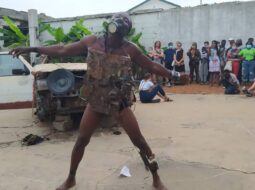
    Politically charged performance at CNC

  • September 12, 2021 • 108

    Performative art marks Chale Wote Festival

  • September 5, 2021 • 144

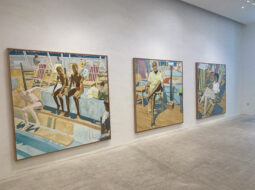
    Post-colonial African dynamism under re-examination

  • August 29, 2021 • 143

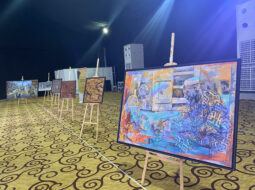
    “Sound Out” exhibition ends in Accra

  • August 22, 2021 • 182

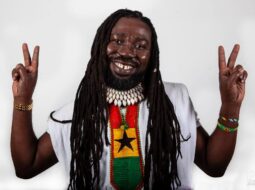
    Australia based Ghanaian musician creates waves

  • August 8, 2021 • 261

    Film showcases richness and diversity of Asante Culture

  • August 1, 2021 • 237

    Stitched canvasses evoke metaphors and symbolism

  • July 18, 2021 • 263

    Chairs take center-stage at Gallery 1957

  • July 11, 2021 • 320

    Kofi Antubam in reminiscence

  • July 4, 2021 • 287

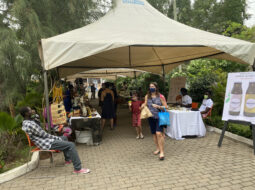
    Cooperative Market opens at Goethe-Institut

  • Volta Region musicians sing for peace

    November 5, 2020 • FeaturedArticle, News • 433

    By Kouame Koulibaly

    (In Ho – Ghana)

    Elections to political office often raise tensions in many places across the globe and music has become one of the tools for cooling those tensions in some places.

    In Ghana, it is not uncommon for musicians of all shades to travel across the country playing concerts that preach against electoral violence. Singles as well as complete albums of peace songs have been put out over the years all in a bid to help promote peaceful and credible elections.

    Musicians in the Volta Region of Ghana are known for joining forces to support worthy causes and they have hit the road again with a series of concerts dubbed Volta for Peace. Organized by Tosh Media and Trans4orm Network Ghana, the concerts are being held in principal towns in the region to raise awareness of the need for all to contribute towards a violence-free general election on December 7.

    “We make our living creating music to make people happy.  There is obviously no work for us in times of conflict.  COVID-19 has already dealt us a damaging blow and we all have to ensure there’s no other hindrance to our welfare by way of unnecessary conflict,” said Tony D, CEO of Tosh Media and Chairman of the Volta Region branch of the Musicians Union of Ghana (MUSIGA).

    “We know we musicians have a big role to play to play in raising awareness about violent-free elections. We are urging that campaigns be based on relevant issues and politicians must refrain from insulting each other language,” Tony D pointed out at the Volta for Peace concert held at the Woezor Hotel in Ho, the regional capital a fortnight ago.

    The musicians, this time joined by some comedians from the region, held another peace event at the White Dove Hotel at Dzodze on October 31. Performers at the show included Tony D, Rap Ziggy, Sister Beauty, Everyday, Saunter S2, Anasco, Mozato, Chilling Mama and China Man. They all presented songs and comedy acts that called for a peaceful Election 2020.

    There were also peace messages from representatives of political parties, security services, chiefs and queen mothers, youth group and other relevant interest groups at the concert. Mama Awoamefi,  Queen mother of Afife, spoke on behalf of Queen mothers in the Ketu North Traditional area.  She advised the youth to learn to identify good politicians from bad ones.

     “The good politicians the ones who seek your welfare and progress at all times. The bad ones give you a few cedis and hard drugs and ask you to commit violent acts while their children stay protected in the comfort of their homes. Please expose those bad ones,” she noted. 

    Togbe Akutu II of Dzodze Afeyieme, also spoke on behalf of chiefs in the traditional area. He called on the media to be circumspect in their reportage in order to maintain the peace Ghana is enjoying and pledged the support of the chiefs in the area to the Volta for Peace initiative.

    Vincent Azumah, founder and Chairman of the Board of Trans4orm, also said recent violent events in the Volta Region required the establishment of response mechanisms to help prevent any escalation of violence.  “We are using music as a universal language and a response mechanism to communicate peaceful coexistence,” he stated.

    “There are many-good-hearted musicians in the Volta Region willing to do things for the common good. The Volta For Peace Project is a manifestation that we are each other’s keeper and we’ll continue to seek progress for our people at all times,” said Tony D.

    After Dzodze, the Volta for Peace train will make stops at Akatsi, Sogakope, Hohoe and Kpando before voting day on December 7.

    Read More »
  • Europhone / Afrophone literatures headline PaGya 2020

    November 3, 2020 • FeaturedArticle, News • 341

    By John Owoo

    (In Accra – Ghana)

    The 2020 edition of PaGya Literary Festival, which ended last week at the Goethe-Institut in Accra, has undoubtedly sparked interest and appetite in writing and publishing in local Ghanaian languages.

    Indeed, the opening discussion between Prof. Kofi Anyidoho (University of Ghana) and Prof. Danabang Kuwabong (University of Puerto Rico), which centered on “Preservation of Ghanaian Languages through Literature”, also touched on the upgrading of Ghana’s linguistic heritage.

    Both academics, who have several books in both English and local languages to their credit, examined the relevance of literature in indigenous languages such as Ga, Ewe, Twi, Dagaare and Dagbani as a way of promoting Ghanaian languages, literature and national development.

    They were of the view that literature, when adopted in all levels of education in the areas of prose, drama and poetry, can play a critical role in informing and orienting the population on actions to take that will result in human development. 

    Undeniably, African literary studies have for decades been rooted in a distinction between Europhone literatures and Afrophone literatures. Each of these two genres was associated with a detailed set of qualities resulting in European language traditions being described as global, written and modern, while those of Africa were often labeled as local, oral and traditional.

    They acknowledged the challenges inherent in writing in local languages but added that these are not unsurmountable while stating that enhancement of the teaching of local languages in schools is not only about enriching these languages but also augmenting knowledge about our culture, traditions and history. 

    German poet, translator and essayist Jan Wagner, who read from his poems participated in a virtual discussion on “Translating Poetry” with Ghanaian poet Nii Ayikwei Parkes, which heralded a poetry fiesta that encompassed several members of Ehalakasa poetry collective.  

    They dilated on how rhyme, which constitutes one of the features of poetry, is particularly challenging in translation. Both poets equally touched on the issue of rhythm which is often achieved with the use of rhyme as well as other stylistic devices such as assonance, consonance and onomatopoeia, which are difficult to reproduce in another language.

    Equally insightful was a discussion between the internationally acclaimed Ghanaian artist Ibrahim Mahama and musician / activist Wanlov the Kubolor on the subject “Art on the Edge”. Moderated by the Dutch / Ghanaian creative mastermind Ama van Danzig, the two artists expatiated on issues relating to the expansion of art parameters in Ghana while zoning in on new and alternative voices and the issue of colonial ghosts.

    Another talk involved two former Ambassadors - D.K Osei and Kabral Blay-Amihere who disused the topic “Traversing the Globe - A Diplomatic Conversation”, they engaged themselves with a lively discussion on a wide range of issues relating to the diplomatic front.

    Various activities that took place during the three-day event include presentations, book readings / signings, workshops, publisher interactions, panel discussions and book launches and others that were largely held through video link ups and live-streaming.  

    With dozens of authors, poets, editors and publishers on site alongside members of the general public participating virtually and physically, this year’s festival was a huge success, despite minor challenges with internet and technical equipment.

    Goethe-Institut Ghana sponsored PaGya Literary Festival 2020.

    Read More »
  • Richmond Laryea: Percussionist in two “worlds”

    November 2, 2020 • FeaturedArticle, News • 307

    By Kouame Koulibaly

    (In Accra - Ghana)

    Percussionist Richmond Otu Laryea straddles two worlds of music: contemporary popular sounds with the Bessa Band and folk/traditional fare with his own Efee Noko Cultural Group.

    He Has been part of  keyboardist Bessa Simon’s Bessa Band since its formation in 2011.On stage with the group, he grooves steadily along with the rhythm and takes his solos at the appropriate times whether the music on hand is Highlife, Jazz, Afrobeat, Reggae or Afro-rock.  

    When he gets behind his kit with his 15-member Efee Noko group of  drummers, singers and dancers,  it becomes a joyous journey into a sphere of Kpanlogo, Adowa, Bambaya, Kete, Borborbor, Gahu, Kpatsa, Takai and other styles of Ghanaian traditional rhythms.

    “It’s not difficult shifting between the two strands of music so long as you love what you do and keep working hard at it. My senses are always are alert to sounds and I’m serious with whatever music I’m involved with at anytime,” says Richmond who also plays the xylophone and an array of other percussion instruments.

    His senses have been alert to the sound of drums since childhood as his father, Asafoiatse Nii Laryea  Akuaku from Nungua in Accra, is a drum maker. There were all sizes of drums available at home all the time and he took to them early in life.

    It was Richmond’s father who originally started the Efee Noko Cultural Group in 1981. It was a well-loved folk band that played gigs across the country. It won competitions and represented Ghana once at at a traditional music festival. After a series of performances at the Aklowa African Village in London, the group disbanded after several of the members got offers to Australia, Germany and other European destinations.

    “That happened about 30 years ago. When I had the idea to form my own traditional band, I asked my father if I could use the Efee Noko name again. He agreed.  We are based at Nungua and doing quite well. The traditional bands are important to help keep up our own rhythms and dances,” Richmond stated.

    The first traditional-oriented band Richmond played with was Indigenafrika, an offshoot of the late Nana Danso Abiam’s Pan-Africa Orchestra and based then at the National Theatre. He has since played with acts such as Kusun Ensemble, Gifty Ose i and Ben Brako. Though a regular part of the Bessa Band, he sits in sometimes with other contemporary popular music bands which need his services.

    Richmond says his musical activities keep him extremely busy but he is happy to be contributing his bit to the promotion of different types of music in this country. Another contribution he is keen to make, together with the rest in Efee Noko, is to donate proceeds from their gigs in the lead-up to Christmas, to orphanages and other needy segments of society. 

    Read More »
  • Covid 19 - Germany supports artistic groups

    October 23, 2020 • FeaturedArticle, News • 370

    By John Owoo

    (In Accra – Ghana)

    A number of institutions, organizations and artistic groups recently benefited from a humanitarian corona emergency aid, which was put together by the German state of North-Rhine-Westphalia.

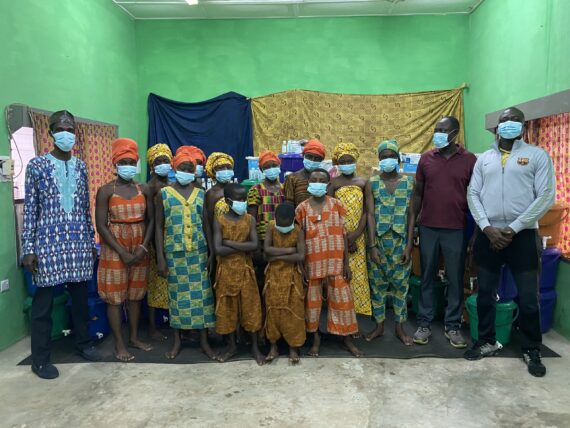
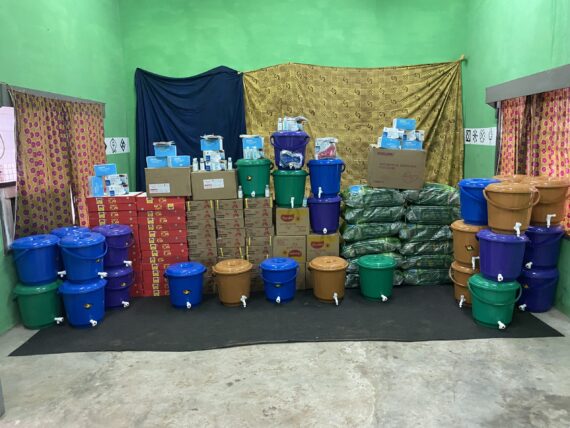
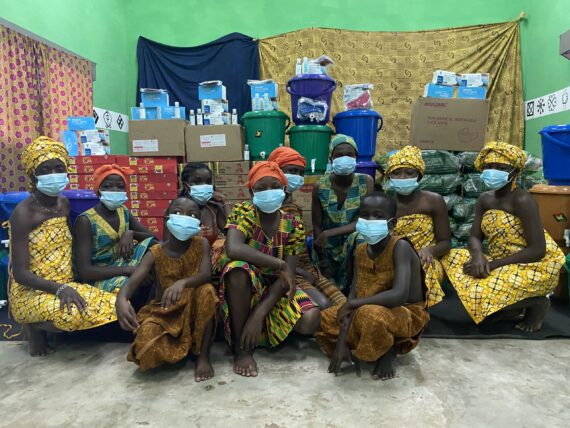
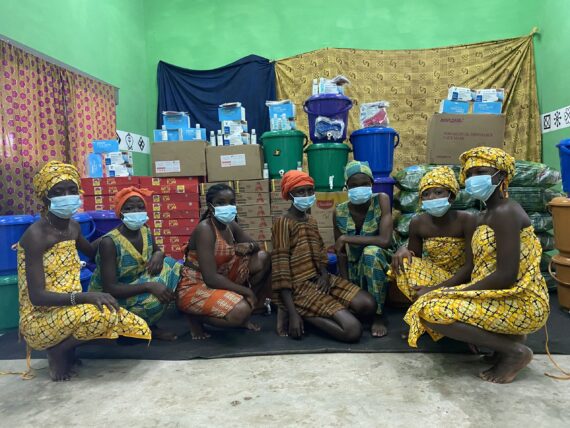
    Tete Adehyemma Dance Theatre, a traditional / contemporary group based in Accra, was one of the beneficiaries owing to its continuous work with deprived kids in the city. Cactus Theatre, a partner of the group in Münster, Germany facilitated the donation to the group.  

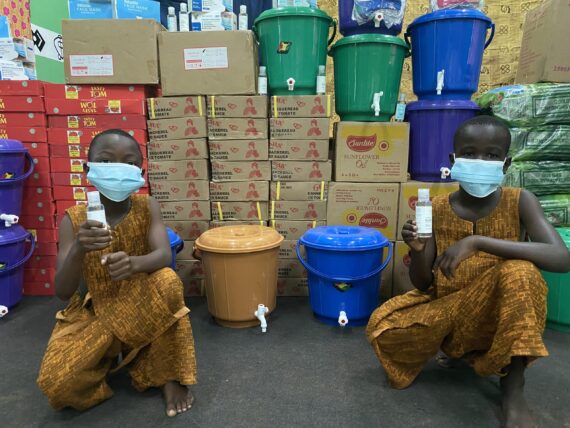
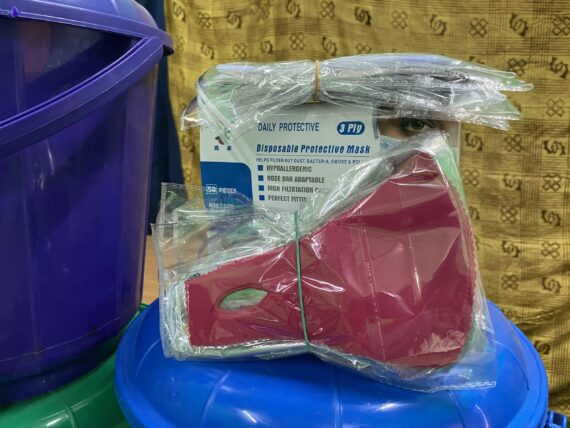
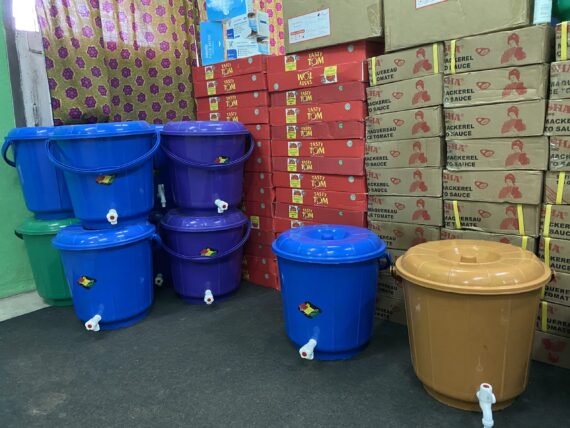
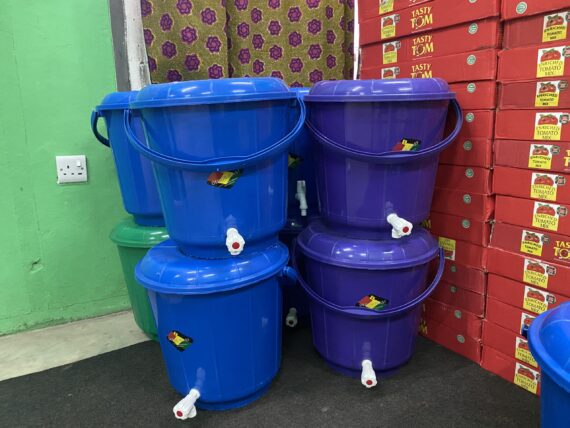
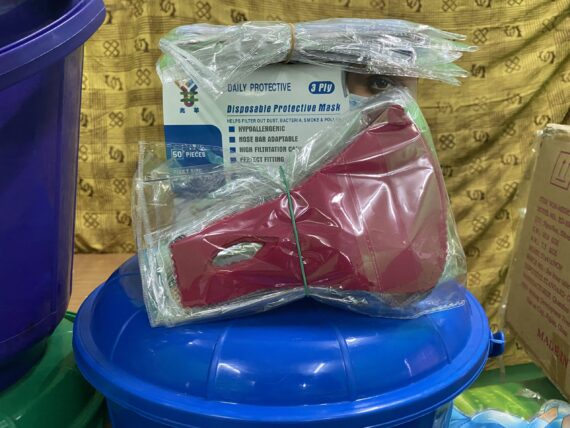
    Items purchased and distributed to members of the group and their families include veronica buckets, disposable / washable face masks, sanitizers, disinfectants, soap, tissue papers, cooking oil, rice and canned tomatoes among others.

    Indeed, North Rhine-Westphalia has tripled the humanitarian Corona emergency aid for Ghana. In addition to the 150,000 euros already approved in June 2020, the state government is now providing a further 300,000 Euros, which will be used for urgently needed food, water, hygiene and general health care.

     “North Rhine-Westphalia is on the side of Ghana. With the emergency aid, we are helping to improve the daily lives of our Ghanaian partners and friends in this emergency situation. International solidarity and cohesion will continue to fight the virus”, said Dr. Stephan Holthoff-Pförtner Minister of European Affairs.

    The second tranche of the emergency aid will support 32 projects in Ghana, which will be implemented by sponsors from North Rhine-Westphalia. The Düsseldorf-based Association Behofa Help Africa, for example, is organizing the provision of free school meals for 300 children from three villages, which had been cut off by the pandemic.

    Another example is the Circle of Friends of Ghana from St. Dionysius Nordwalde, which takes care of the water supply for two schools and a community center. Other projects support the construction of wells and provision of “veronica buckets” to facilitate hand washing.

    Led by Benjamin Sam with Frank Sam as the artistic director, the group evolved out of a pilot project, which the Government of Ghana initiated in 1990 to address socio-cultural needs of the youth and children in deprived communities.

    Currently six of its members are pursuing tertiary, secondary and vocational education – a situation that was made possible through a collaboration with Cactus Theatre.

    Read More »
  • Array of colours, symbolism & essence at Gallery 1957

    October 19, 2020 • FeaturedArticle, News • 377

    By John Owoo

    (In Accra – Ghana)

    Malian artist Abdoulaye Konate does not cease to surprise art lovers with his multi layered assemblages that are characterized by stirring compositions while vibrating with rich and deep colours.

    In his first solo exhibition in Ghana, the weaver turned Gallery 1957 in Accra into a groove of colours by employing the famous kente cloth and other fabrics, which he delicately cuts and sews into giant pieces.

    Radiating history, spirituality and politics, symbolism and essence, works by Konate equally evoke bouts of emotion from viewers while sparking intrinsic / extrinsic impressions - all through the power of insignia. 

    With a complex blend of woven and dyed fabrics from Mali and Ghana, Konate produced large-scale abstract and figurative compositions that recall the skills of West African weavers and textile traditions. Undeniably, he meticulously created a scenario where fabrics equally venerate and communicate.  

    Strips of materials in blues, greens, reds, golds and others overlap accurately and symbolically as he interweaves diverse material cultures and societies across the African continent. Employing geometric and abstract shapes, the artist similarly generates a space of energy, peace and tranquility.

    Curated by Dr. Silvia Forni, a senior curator at the Royal Ontario Museum (Canada), large scale works on show also incorporate motifs from the Sahel, royal figures, subtle comments on globalization and references to the state of affairs in his native Mali.   

    In 1996, Konate was awarded the Grand Prize at the Dakar African Contemporary Art Biennial. His works have been shown on all continents in many festivals, biennials and exhibitions, including the well-known traveling exhibition, “Africa Remix” (2004-2007).

    Most prestigious institutions have welcomed his works, including the Smithsonian Institution in Washington D.C. (USA), Museum of Modern Art, Arab World Institute and Fondation Blachère - all in France. 

    He was the director of exhibitions at the National Museum of Mali from 1985 to 1997, Director of the “Palais de la Culture de Bamako” and “Rencontres Photographiques de Bamako” from 1998 to 2002. Since 2003, he has directed the “Conservatoire des Arts et Métiers Multimédia”in Bamako, Mali.

    An Associate Professor of Anthropology at the University of Toronto, Dr. Forni is in charge of the African Collection at the Royal Ontario Museum of Art and Culture and responsible for the permanent and rotating display of African artworks in the Shreyas and Mina Ajmera Gallery of Africa in Canada.

    The exhibition ends on Monday November 30, 2020.

    Read More »
  • Wole Soyinka in a chat at Goethe-Institut

    October 7, 2020 • FeaturedArticle, News • 530

    By John Owoo

    (In Accra - Ghana)

    Nigerian academic, playwright, poet and essayist Prof. Wole Soyinka recently explained to an audience at the Goethe-Institut the complex issues that resulted in the writing of his second book “Season of Anomy”.

    In a conversation with the Ghanaian anthologist Ivor Agyeman Duah on the topic “A Season of Anomy - Covid 19 and the Creative Muse”, Prof Soyinka said the book follows a period of serious ideological direction where some African intellectuals accepted textbooks from the West while ignoring the principles of social reconstruction.

    The Nobel Prize for Literature laureate for 1986 noted that these books were accepted by African intellectuals “hook, line and sinker” without any attempt at relating them to the material realities of their own societies although they were supposed to be based on material actualities.

    “I tried to extract from traditional social mores, ideas that could be propelled into the transformation of societies in a contemporary context”, said Soyinka - whose 1974 book “Season of Anomy” - employed the myth of Orpheus and Eurydice to examine the horrifying Nigerian civil war, which claimed the lives of two million people between 1967 and 1970.

    “It was a very difficult period – on one hand, one contested the ideological rigidity by fighting his / her own colleagues while on the other the monolithic mentality, which will eventually lead to monstrosities like the actions of Ethiopia’s Derg, whose notion of revolution was enormously morbid”, he stated.

    Touching on dictators, Soyinka said it is highly ridiculous for people who say they want society to progress kill their enemies and become true revolutionaries only when they slaughter humans and reduce them to statistics – a situation he described as absurd.

    On his relationship with the arts, the activist stated that it was part of the struggle having lived as a kid in the midst of rich and colourful traditions and quietly noting the looting of African art and artifacts, which he claimed was part of the ploy to degrade African societies while bolstering the colonial / imperial unequal relationship.

    “With the rise of religious fundamentalism, our culture and traditions were denigrated by our own people who were unstoppable iconoclasts - they destroyed shrines, attacked traditional processions and engaged in violent conversions”, added the octogenarian.

    He described the late Afro Beat King Fela Anikulapo Kuti as an outsider and was actually fascinated watching his transformation into a Pan Africanist while recalling a performance he had with Kuti in the United Kingdom decades ago.              

    Soyinka has been a strong critic of dictatorial and tyrannical regimes in Africa. Indeed, most of his writing has been concerned with oppressive rulers and actually paid a high price for his activism. During the regime of the late Gen Sani Abacha (1993 - 98), Soyinka escaped from Nigeria on a motorcycle and was later sentenced to death in absentia.

    He was a Professor of Comparative Literature (1975 to 1999) at the Obafemi Awolowo University (Nigeria), Cornell University as Goldwin Smith Professor for African Studies and Theatre Arts (1988 - 1991) and Emory University (all in the USA), where in 1996 he was appointed Robert W. Woodruff Professor of the Arts.

    Soyinka has also been a Professor of Creative Writing at the University of Nevada Las Vegas, a scholar-in-residence at New York University’s Institute of African American Affairs and Loyola Marymount University (all in the USA). He has also taught at the universities of Oxford (UK), Harvard and Yale and was also a Distinguished Scholar in Residence at Duke University (all in the USA).

    In December 2017, he was awarded the Europe Theatre Prize in the “Special Prize” category, which is awarded to someone who has “contributed to the realization of cultural events that promote understanding and the exchange of knowledge.

    The programme was organized by the Council for Foreign Relations Ghana, Goethe Institut, Writers Project of Ghana, e-Ananse and Vidya Bookshop.

    Read More »
  • Harmoniously crafted solos engulf Goethe-Institut

    September 23, 2020 • FeaturedArticle, News • 485

    By John Owoo

    (In Accra - Ghana)

    A cool night breeze from the Atlantic Ocean enabled leaves on several trees to shift listlessly as rich rhythms from five talented musicians filled the air at the Goethe-Institut in Accra.

    In a performance that forms part of the Institut’s Covid 19 programmes, the Soul Nice group led by Bright Osei exhibited great tact and poise as they unfolded intricate compositions from individual members of the group.

    Featuring Anthony Ansah (tenor sax), Anthony Adubofour (drums), Nicholas Mettle (piano), Kenneth Obi (talking drums) and Bright Osei (bass guitar), the band performed with passion and enthusiasm to a virtual audience that is trying to adjust to what has been described as “new normal”.

    With emphatic lines from Osei, Mettle and Ansah, sounds from the stage were heightened with drum beats from Adubofour and Obi while minimal stage lighting added to the environmental poignancy of the performance hall.

    A number of tunes including “Funky Jamestown” (Bright Osei), “Praise Him / Funk In the Air” (Anthony Ansah), “Worry Not” (Dave Corbus / Bright Osei) and “You Don’t Want to Know” (Nicholas Mettle) that flowed like a stream, vividly revealed the power of improvisation and blending of cross cultural rhythms.

    Interspersed with a series of harmoniously crafted solos, Osei, who is also a composer / arranger and his musicians filled the near empty auditorium with infectious drum beats, hyper funk textures and instinctive saxophone lines that sounded like a galactic artistic feast.

    Band leader Osei has toured with a number of highlife greats including Jewel Ackah, Papa Yankson, Gyedu Blay-Ambolley, Paa Bobo, Daddy Lumba, Ofori Amponsah and Kojo Antwi among others. He subsequently moved into jazz and has been performing with the GH Jazz Collective, a group based in Accra.

    On the international front, he has performed with Barry Finnerty, Peter White (UK), Tues Nobel (Netherlands), Nicholas Genest (France), Entienne Charles, Gordon Louis, Benjamin Boone, Dave Corbos, Rocky Dawuni (USA), Pilani Bubu, Ernie Smith (South Africa), Gert Vincent (Denmark) and others.

    Goethe-Institut Ghana sponsored the concert.

    Read More »
  • Reading Clinic ends at CYCC

    September 9, 2020 • FeaturedArticle, News • 574

    By John Owoo

    (In Accra – Ghana)

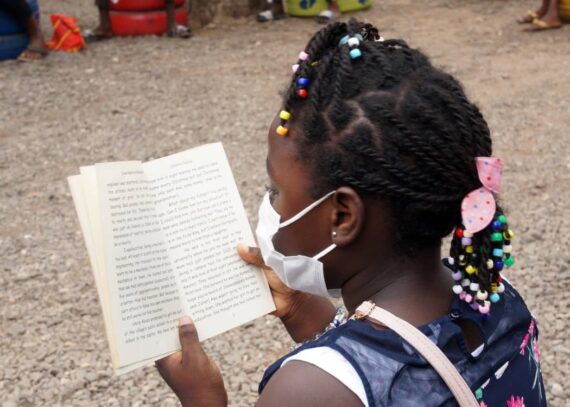
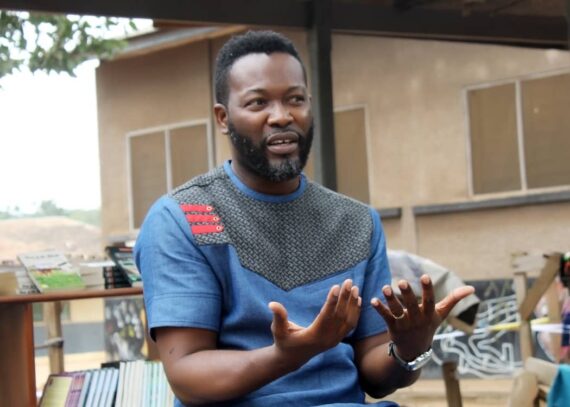
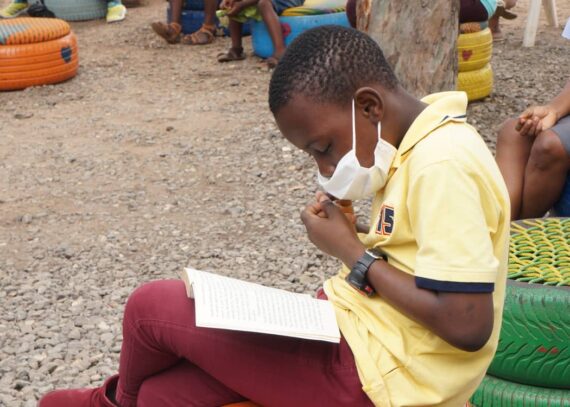
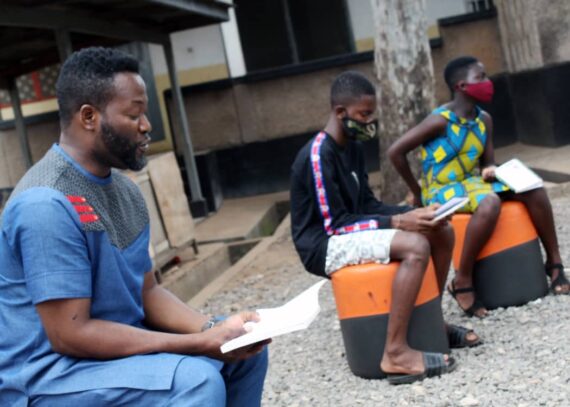
    A reading clinic moderated by the Ghanaian actor / academic Adjetey Annan for children ended last week at the Community Youth Cultural Center (CYCC) in Accra.

    Organized by the CYCC as part of its 30th anniversary celebrations, the clinic among others was aimed at creating an enabling environment that supports children’s growth and independent reading skills alongside strategies they need to read complex texts.

    Employing the use of “Grief Child”, written by Lawrence Darmani, Annan took the participants, who are between four and seventeen years through book choice, building reading stamina, decoding skills and comprehension.

    Annan encouraged the children present to read books and share the stories with their friends in order to help improve their knowledge of words, use of language, stimulation of their imaginations, developing their literacy and communication skills.

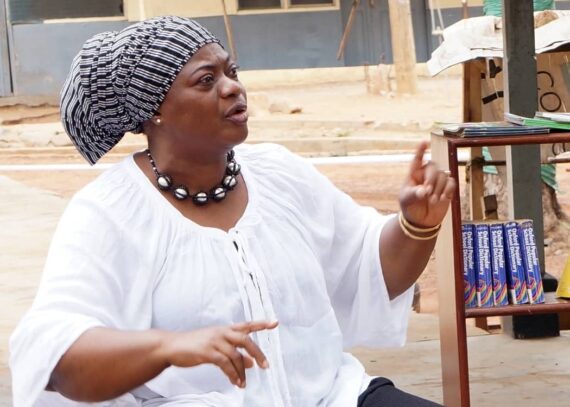
    Earlier, Director of CYCC, Dr. Akosua Abdallah urged participants to register at libraries with adequate content of reading materials while underpinning the fact that reading fluently and comprehensively gives them the practice they need to grow and develop interdependent skills of reading.

    Founded in 1989, the CYCC programme aims at responding and satisfying the out-of-school recreational needs of the youth, identify and realize the latent talents of young people, enhance the creative and cultural abilities of the youth and channel their energies into positive use.

    Others are to promote the positive values of patriotism, cooperation and internationalism among the youth, prepare the youth as an important manpower resource for development and set the basis for the evolution of Youth Cultural Movement in the country.

    Events lined up for the anniversary include a webinar conference dubbed “CYCC @ 30: Topics earmarked include “Towards a Sustainable Creative Arts Economy and Youth Empowerment”, “Recorded Theatre for Development Skills on Topical Issues”, “Covid 19 Protocols”, “Teenage Pregnancy” and “Drug / Substance Abuse”.

    Read More »
  • Ghanaian choreographer makes strides in the US

    September 3, 2020 • FeaturedArticle, News • 655

    By John Owoo

    (In Accra – Ghana)

    US based Ghanaian dancer / choreographer Alhassan Yawuza has over the years been creating waves in festivals and other artistic events around New York City and beyond.

    Early this year, Yawuza and his group of dancers known as Wuza Wuza delighted audiences and arts professionals alike with expressive, energetic and infectious dance pieces in various parts of New York and its environs.

    During the 2020 edition of Ghana Fest New York Festival, the group presented a new Africa through educative, cultural and harmonious performances and workshops at the Crotona Park that surprised dance connoisseurs and critics alike.

    Ghana Fest New York Festival 2020, which was the 11th annual public installation and celebration of Ghanaian culture and heritage was live-streamed across the globe with performances from artists in the US and Ghana.

    Known for his innovative movement research and unique choreographic approach, Yawuza’s works centre on diverse issues that relate to tradition, culture womanhood and diversity. His pieces are characterized by contorted arches, sudden breakdowns and abrupt holds that are complimented by refreshing solos.

    A dynamic choreographer and dancer, he was trained at the Noyam African Dance Institute, which is located on the foothills of the Akuapem Mountains in Dodowa, near the Ghanaian capital Accra. He has previously worked with several dance groups in the Northern regional capital of Tamale and Accra.

    With a number of choreographed dance pieces to his credit, he has organized several workshops and performances at the Wuza Wuza Centre in Accra and several venues in Ghana, Holland and the United States.

    The festival was organized by The Bronx Council on the Arts, a pioneering advocate for cultural equity that nurtures the development of a diverse array of artists and arts organizations and builds strong cultural connections in and beyond The Bronx.

    New York City Cultural Affairs, National Endowment Fund for the Arts, New York Council on the Arts and Art Works sponsored Ghana Fest New York Festival 2020.

    Read More »
  • US based Ghanaian artist / academic honored

    August 25, 2020 • FeaturedArticle, News • 492

    By John Owoo

    (In Accra – Ghana)

    US based Ghanaian artist / academic, Dr. Paschal Yao Younge, has been awarded the 2020 Ohio Heritage Fellowship Award for Performing Arts from the Ohio Arts Council (USA).

    Ohio Heritage Fellowships are awarded in recognition of the significant impact an individual or group has had on the people and communities of the state through their advancement and preservation of folk or traditional arts.

    A master artist specializing in African Traditional Musical Arts, Younge is a professor of music education at Ohio University, where he also serves as director of the annual International Summer Program in African Interdisciplinary Arts.

    Also a musician, composer and author, he is a specialist in African choral and brass music and a clinician in sub-Saharan African musical arts. His research focuses on topics such as intercultural and multicultural music education / fine arts curricula, creative performance issues and practices in music and dance and world percussion.

    The astute performer also directs Azaguno, an Ohio-based performance group focusing on the research, preservation and performance of African, African-American, Caribbean and Latin American music and dance. Indeed, the group has performed a number of times at the National Theatre in Accra alongside local and other foreign artistes.

    Through Azaguno, as well as his career as a solo artist and teacher, Younge has performed and taught traditional African Musical Arts throughout Ohio and abroad. As part of this work, Younge has created opportunities for children, university students, academics, and professional artists to engage, study and perform African music.

    A co-artistic director of an African Ensemble in Ohio, Younge is the author of several publications. These include “Music and Dance Traditions of Ghana: History, Performance and Teaching”, “Dance-Drumming Ceremonies of Ghana”, “Ghana: Rhythms of the People”, “Traditional music and Dance of the Ewe, Dagbamba, Fante and Ga People”, “Mano Efe Dusime”, “ Yeve: Ritual Music and Dance of a Secret Society” and “Four Choruses from Ghana”.

    Younge, who acquired the skill, techniques and knowledge of traditional African Musical Arts and Culture from Ghana and other parts of sub-Saharan Africa, has worked closely with nearly one hundred traditional masters and performance groups and has presented and performed in over sixteen countries.

    Ohio Arts Council is a state agency that funds and supports quality arts experiences to strengthen Ohio communities culturally, educationally and economically while the Ohio Heritage Fellowship program assists artists who are masters of their chosen art form and contribute to public visibility of folk and traditional arts in Ohio.  

    The USD 5,000 award is given in one of three categories - Performing Arts, Material Culture or Community Leadership.

    Read More »
« 1 2 3 4 5 6 … 28 »

Subscribe to Arts Ghana News

Enter your email address to subscribe. Receive notifications of new posts by email.

RECENT VIDEOS

Simple Slideshow

  • Alliance Française
  • Arterial Network

© 2021 Arts Ghana™

Website Developed by Creative Solutions