
Latest
  • visit www.artsghana.org for information on the arts
  • visit www.artsghana.org for information on the arts

Arts Ghana

MENU
  • Home
  • About Us
  • Upcoming Events
  • Latest News
  • Artistes Database
  • Archives
  • Links
  • Contact Us
  • Music
  • Dance
  • Theatre
  • Literature
  • Visual Arts
  • Film
  • Fashion
  • You Tube
  • Facebook
  • May 23, 2022 • 45

    “Neo-Highlife” captivates audience in Accra

  • May 15, 2022 • 80

    Illusional and philosophical drawings at Goethe-Institut

  • May 8, 2022 • 149

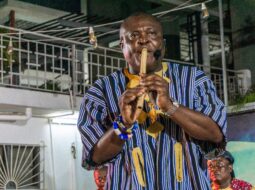
    Accra marks International Jazz Day with varied concerts

  • April 6, 2022 • 135

    Dance piece venerates womanhood

  • March 30, 2022 • 162

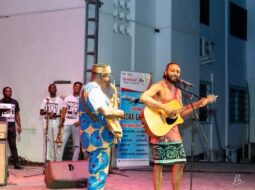
    Highlife renaissance at Goethe-Institut

  • March 24, 2022 • 185

    African Identities to show at Venice Biennial

  • March 17, 2022 • 167

    Politically charged lyrics end Highlife Festival

  • March 12, 2022 • 238

    Traditional / Urban music albums launched in Accra

  • March 4, 2022 • 188

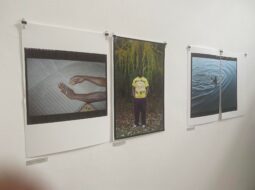
    Migration / Re-migration in retrospect through photos

  • February 28, 2022 • 166

    Intersecting rhythms shake Goethe-Institut

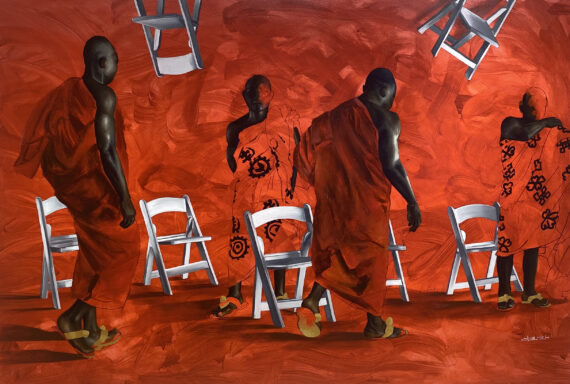
  • Chairs take center-stage at Gallery 1957

    July 18, 2021 • FeaturedArticle, News • 510

    By John Owoo

    (In Accra – Ghana)

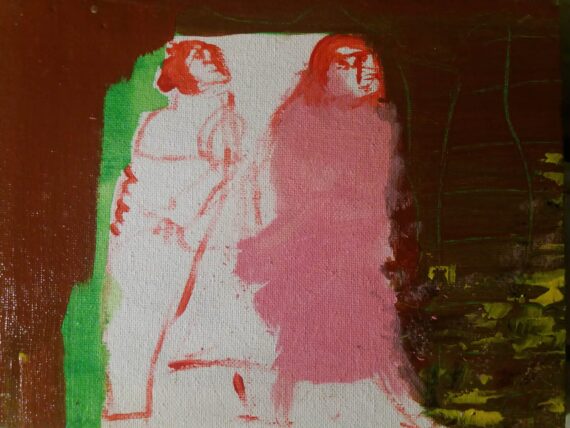
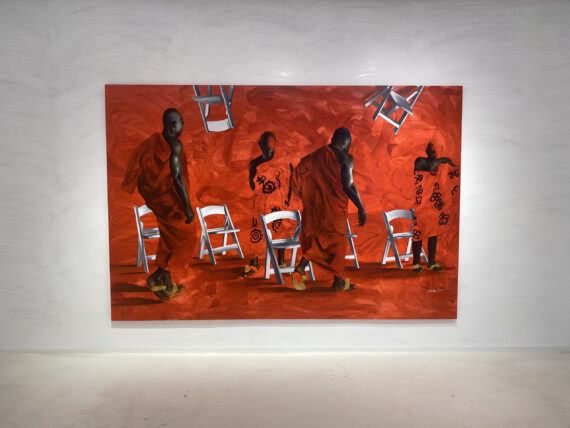
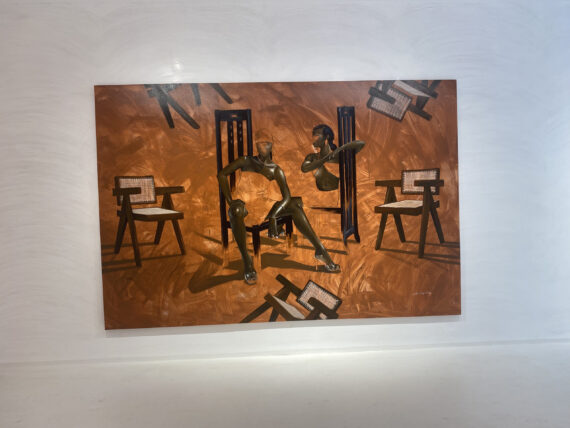
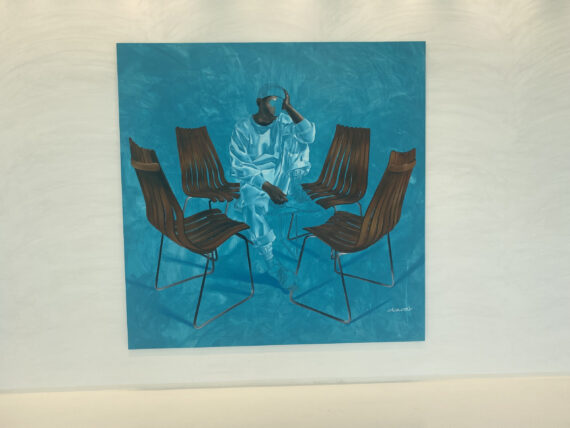
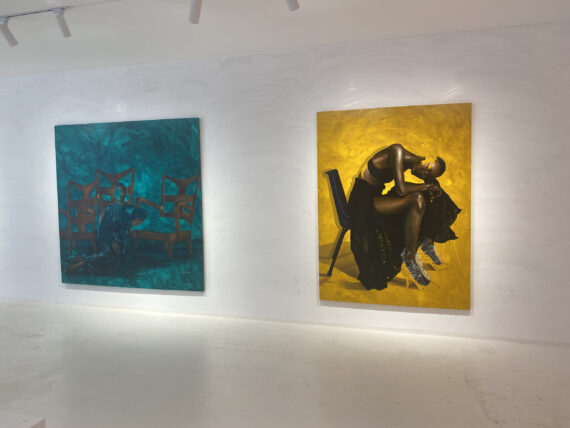
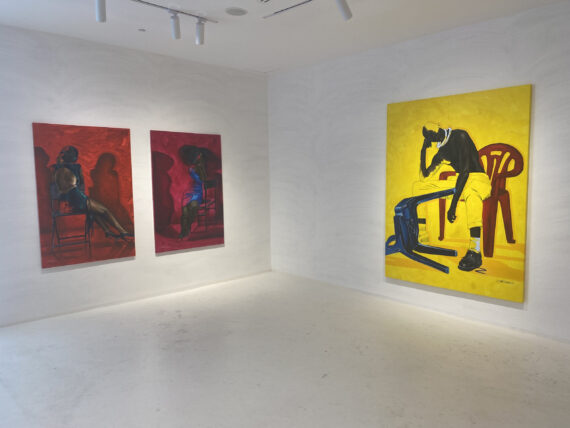
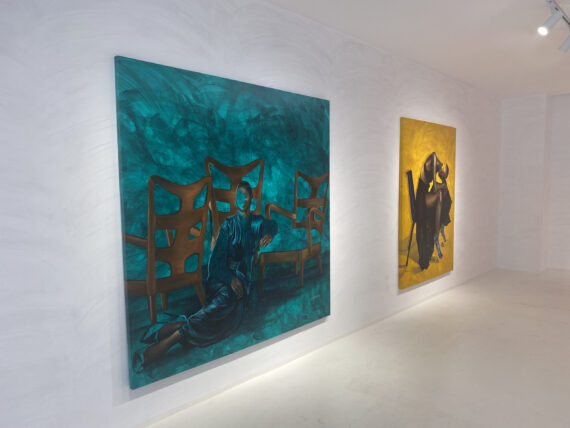
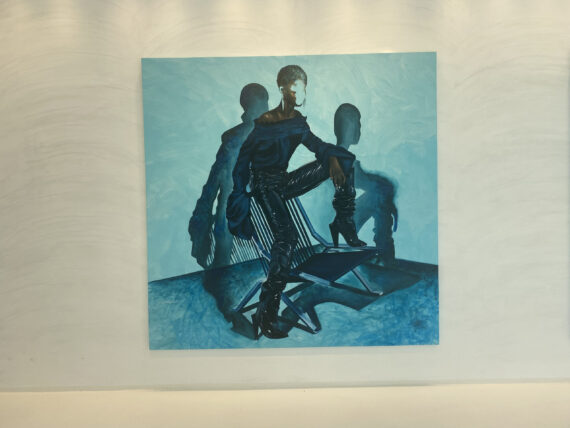
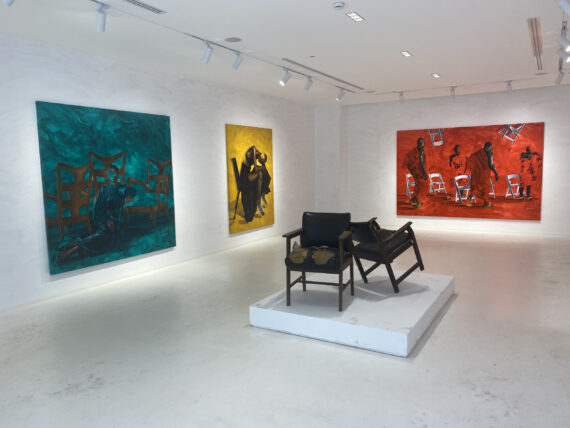
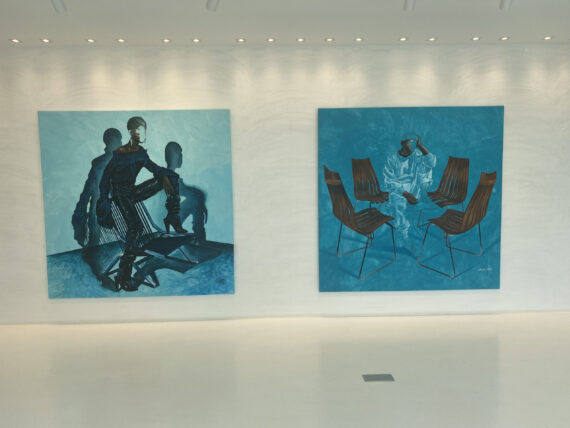
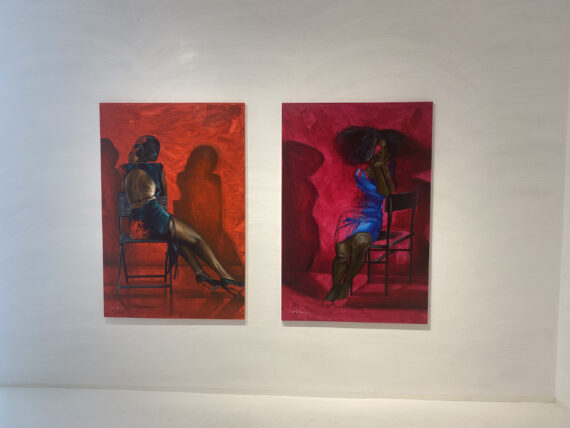
    Large scale paintings by Joshua Oheneba-Takyi that tend to interrelate, interdepend and intermingle with chairs are on display at Gallery 1957 in Accra. 

    Interspersed with tenderly sanitized human figures that have been portrayed in a variety of postures - the chairs are created through a cool combination of geometrics and intersecting lines - thereby endowing them with personality.  

    Designed to represent the concept of dynamism, these ever-present chairs are contrasted with the fluidity of the human form thus emphasizing the latter while allowing the viewer to fully embrace each individual’s unique character. 

    His female figures are replete with fashionable clothes topped with high heeled footwear while the males are largely in traditional wear. Another trait is the partial blocking of faces of some of his subjects, who tend to be either in motion or a static pose.

    With backgrounds characterized by broad brush strokes in diverse colours, his paintings have in recent years increasingly drawn attention from local and international stakeholders resulting in a number of shows.

    Undeniably, his artworks intimately document and examine the themes of placement and displacement while often employing the chair as a metaphor for notions of stability and belonging.

    Oheneba-Takyi demonstrated an affinity for art at an early age as a coping mechanism for his dyslexia. Moving away from these difficulties, he pursued a degree in Construction Technology and Management at the Kwame Nkrumah University of Science and Technology (Kumasi) in 2020.

    He has exhibited his works at the Jubilee Mall (Kumasi) and has taken part in several group exhibitions at Antique Lemonade Gallery and Secret Garden - all in Accra. His collectors include the acclaimed Ghanaian / British architect Sir David Adjaye.

    Titled “A Seat at the Table”, the exhibition ends on Tuesday August 10, 2021.

    Read More »
  • Kofi Antubam in reminiscence

    July 11, 2021 • FeaturedArticle, News • 515

    By John Owoo

    (In Accra – Ghana)

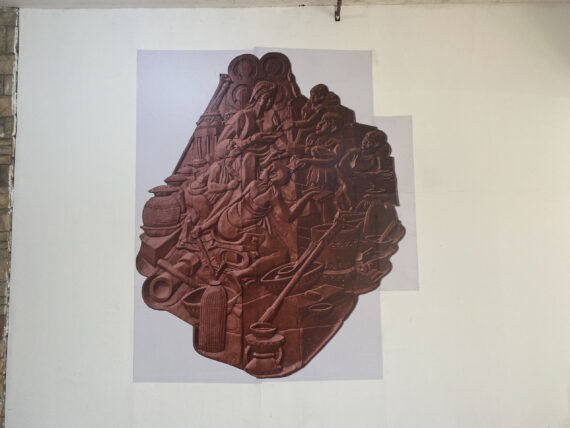
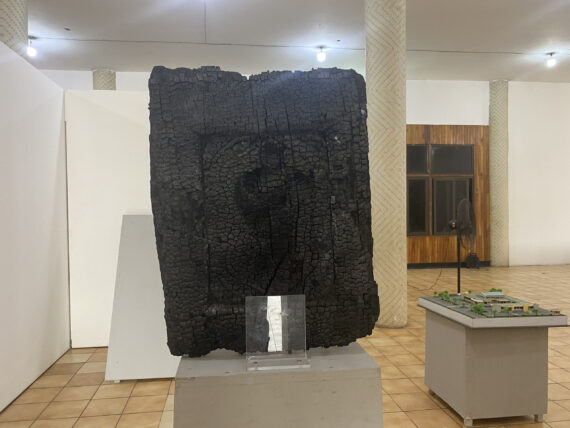
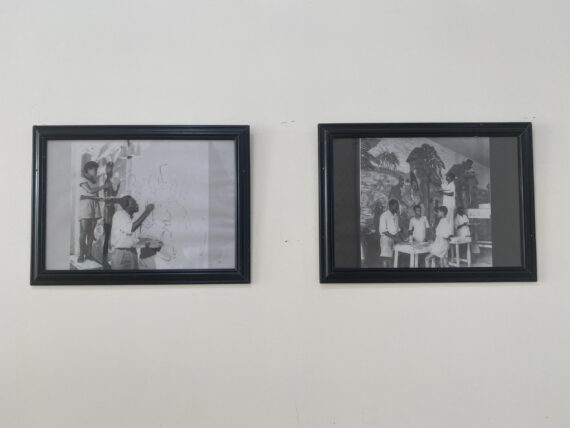
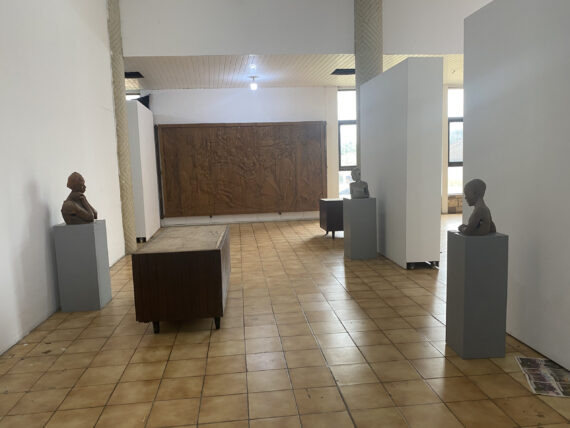
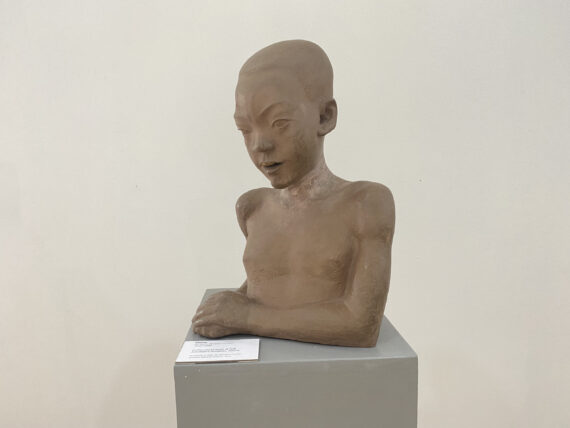
    Works by the late pioneering artist Kofi Antubam, which forms part of the MFA research work by Elizabeth Asafo-Adjei, are currently on show at the Museum of Science and Technology in Accra.

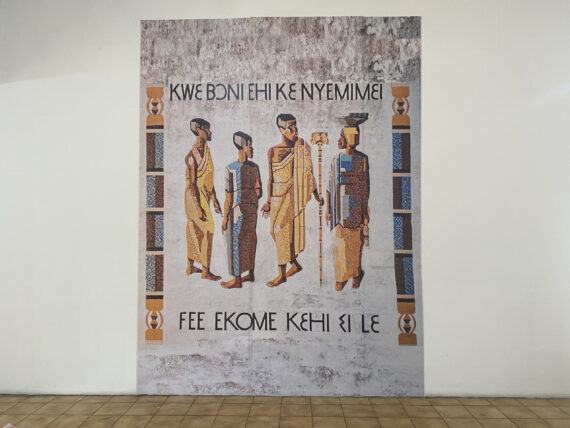
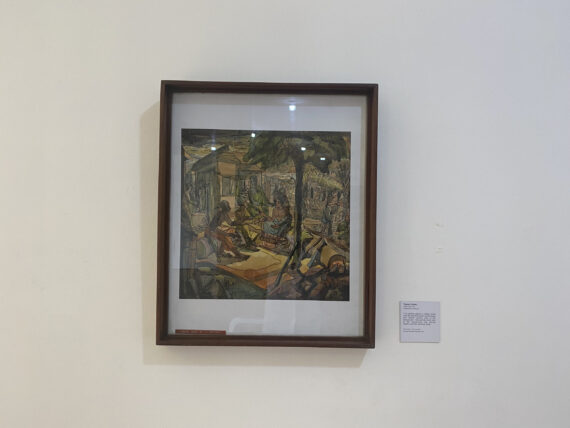
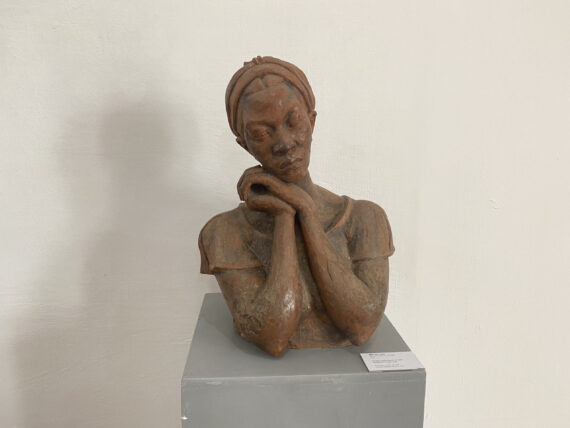
    Remembered for his realistic and narrative scenes of idealized African life, which he depicted in wall paintings, sculptures and mosaics, his pieces on display equally reveal him as a masterful technician, who vividly promoted community life in Ghana.

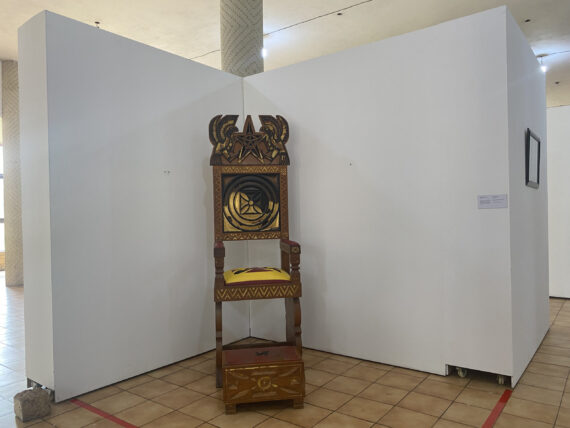
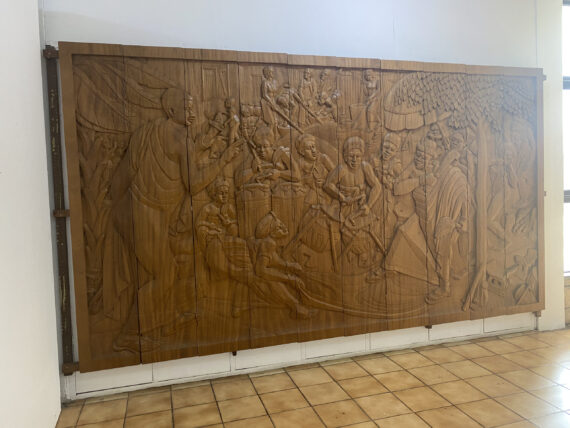
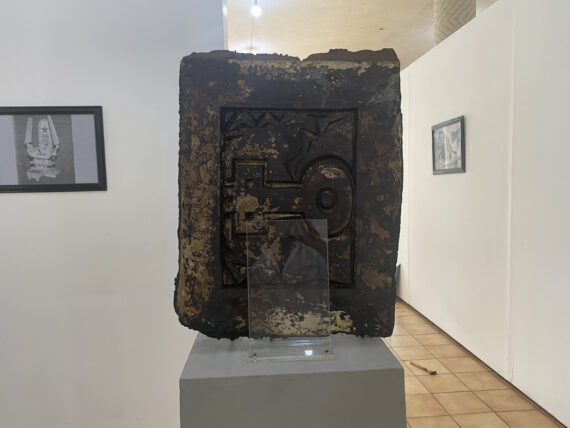
    Curated by Asafo-Adjei, the exhibition is showcasing a limited number of his iconic paintings, wooden panels / doors, sculptures and for the first-time rare stamps, photographs and video clips, which represent part of his rich inventory.   

    Titled “Unsettling the Dust”, the works were drawn from the collections of Ghana Museums and Monuments Board, George Padmore / Balme Libraries and public spaces like the Ghana National Children’s Library and Accra Metropolitan Assembly’s Maintenance Office (Former Accra Community Centre) among others.  

    Antobam’s works include wooden reliefs on the façade of the old parliament building in Accra (1950), murals on the United Nations building in Geneva (Switzerland 1950s) and a series of woodcuts titled “The Life and Customs of the African People” (1959 - 61).

    He also developed various works of art and crafts including Nkrumah’s presidential mace and chair as well as various state commissioned relief mural carvings while pioneering the use of adinkra symbols in Ghanaian art.

    Following Ghana’s independence in 1957, Antubam was appointed an official state artist, which was a predictable act due to his belief that artists should contribute to national pride and development by representing their country’s unique past and rich culture.

    Kofi Antubam received his art education at Achimota School (Ghana) and Goldsmiths College (United Kingdom) and has exhibited his work both in Ghana and internationally. These include London (United Kingdom), Paris (France), Rome (Italy), Düsseldorf (Germany) and New York (United Sates of America).

    The exhibition, which was supported by the Museum of Science and Technology, Kwame Nkrumah University of Science and Technology, blaxTARLINES and the Goethe-Institut in Accra, ends on Friday July 30, 2021.

    Read More »
  • Cooperative Market opens at Goethe-Institut

    July 4, 2021 • FeaturedArticle, News • 474

    By John Owoo

    (In Accra – Ghana)

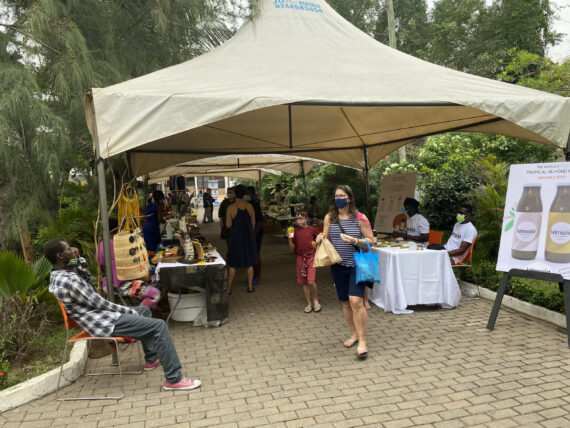
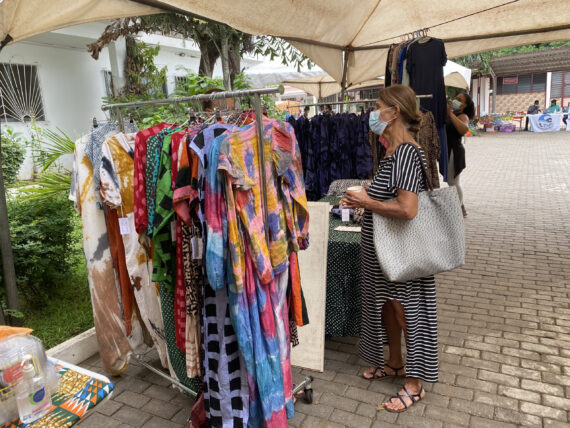
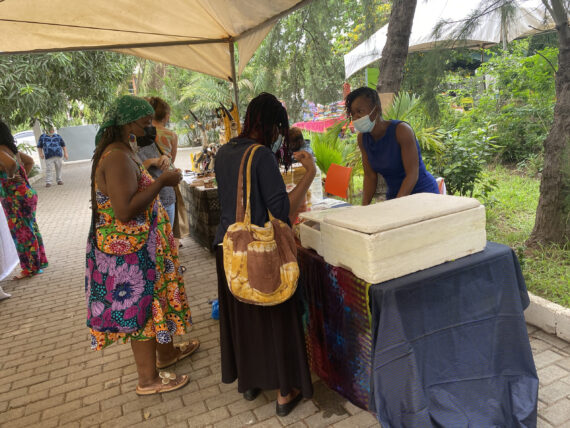
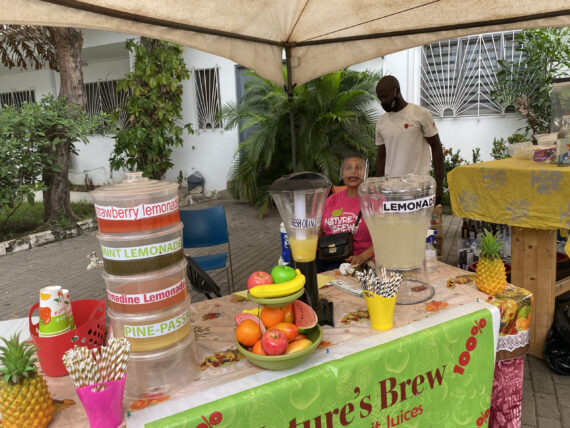
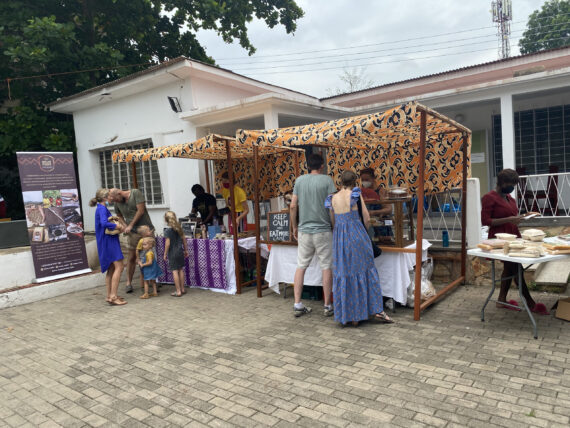
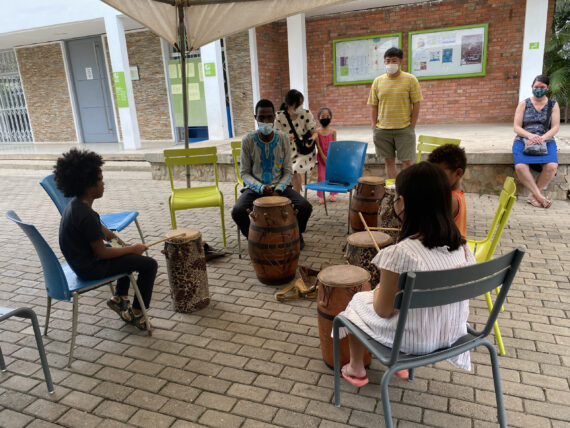
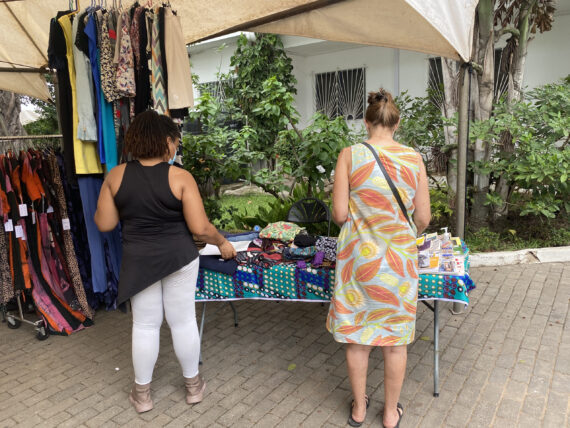
    A cooperative market that aims at providing local entrepreneurs with a curated space that offer fair vendor conditions opened last week at the Goethe-Institut in Accra.

    Retailers were carefully selected to ensure diversity of products while preventing internal competition, guaranteeing easy navigation by customers and making available a wide variety of products and services.

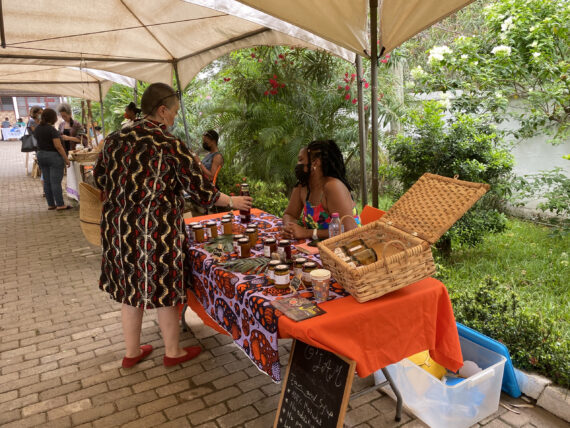
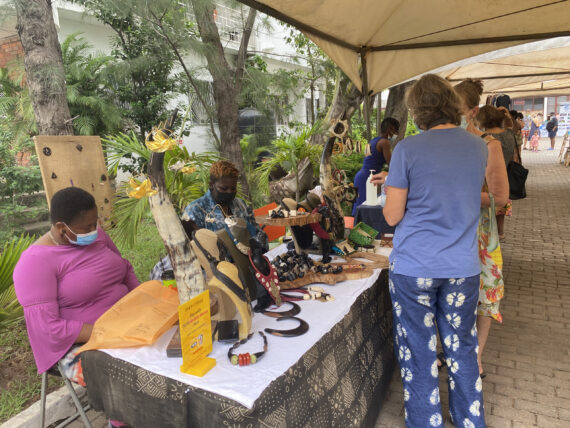
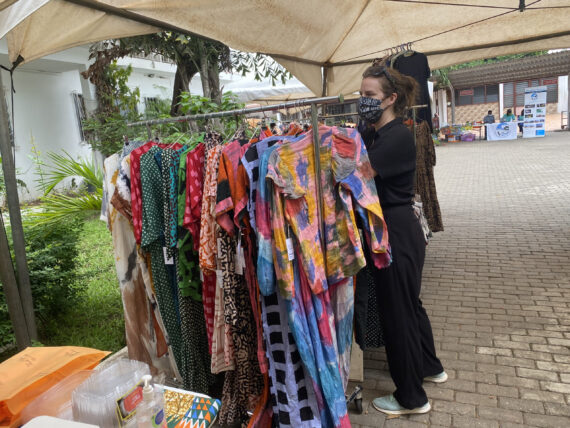
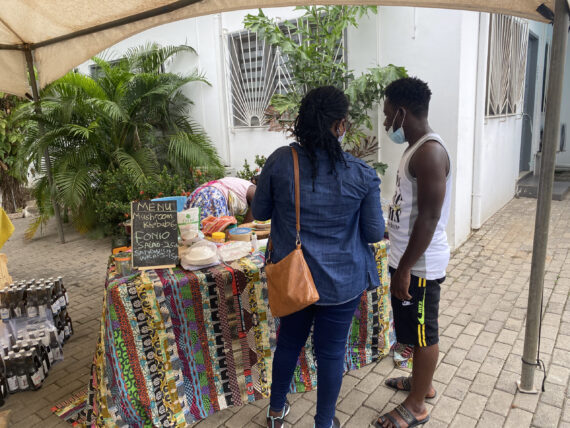
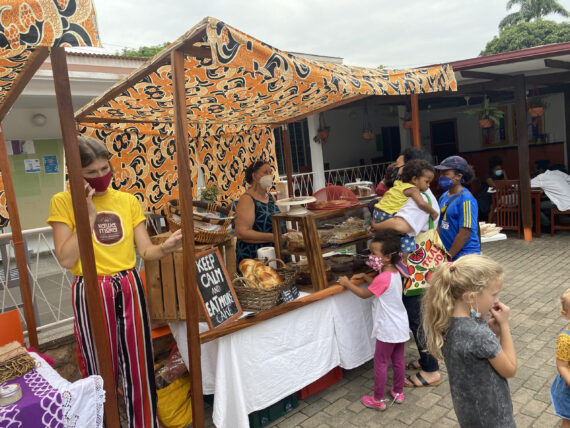
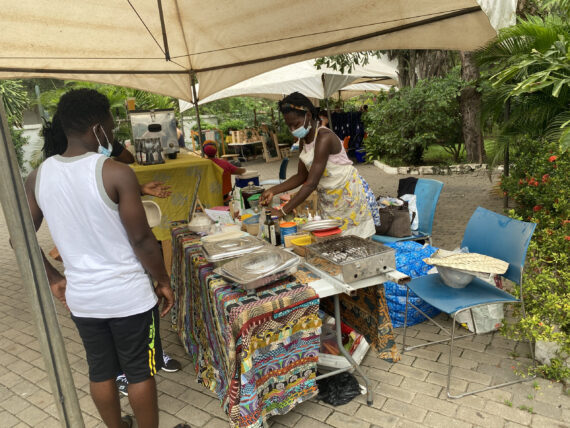
    With an eclectic fusion of products that ranged from locally produced crafts, clothes, cosmetics, beverages, foodstuff and old books, the organizers limited the number of vendors to ensure adequate space for traders and customers while enforcing Covid 19 protocols.

    “It is a varied collection of products, books and a wonderful selection of local food and snacks – indeed, very few patrons will go away empty handed from this lively, fun and tempting collection of goodies”, said Maaike Bleeker, a teacher from The Netherlands.

    “The cooperative market, which will be periodic, equally aims at creating an effective waste management strategy by ensuring the use of plastics that can be recycled in Ghana while educating members on the need to protect the environment at all times”, added Sarah Kunkel, one of the organizers.

    Items that were on sale include jewelry, bags sewn from local fabrics, prêt-à-porter clothes, collectibles, healthy fruit drinks, food from organic vegetables, local coffee, cakes, almond drinks, sculptures, mushroom khebabs, salads, bio-degradable food containers, straws and cups.

    With stalls laid out in an orderly grid, patrons enjoyed the rather cool atmosphere and friendly nature of the premises of the Institut, which is noted for its lush gardens and serene ambiance.

    Tagay, a group of musicians comprising Filipinos living in Accra entertained the vendors and patrons with cool music while Ghanaian drummer / choreographer Frank Sam engaged kids with basic drumming lessons.

    Watch out for the next Coop Market at the Goethe-Institut.

    Read More »
  • Amba Gallery opens with a vivacious photo exhibition

    June 27, 2021 • FeaturedArticle, News • 546

    By John Owoo

    (In Accra – Ghana)

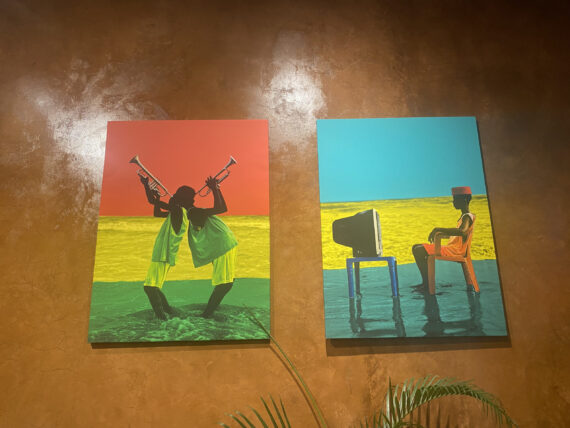
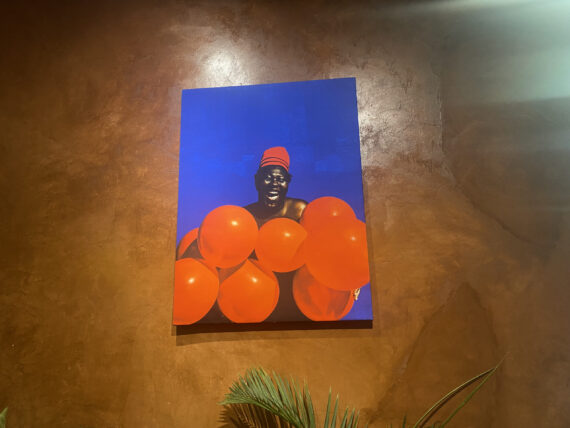
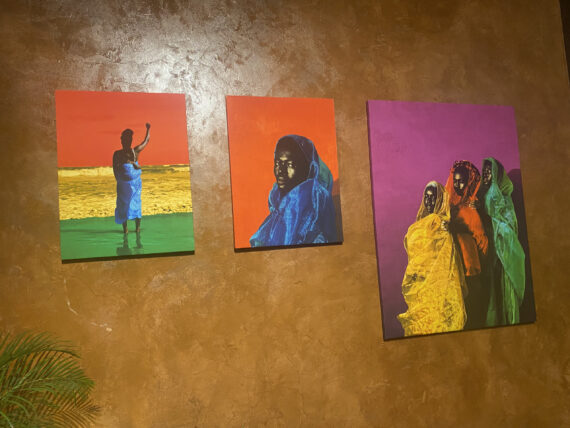
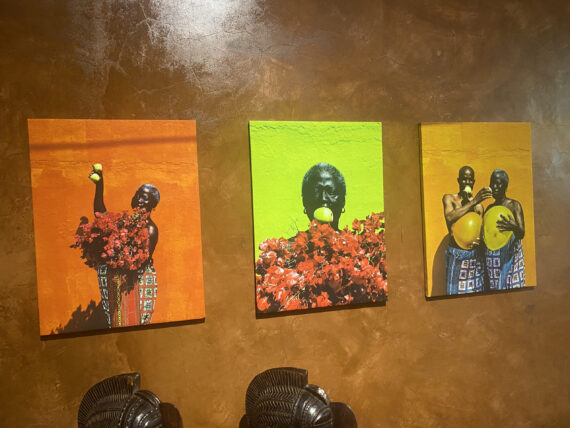
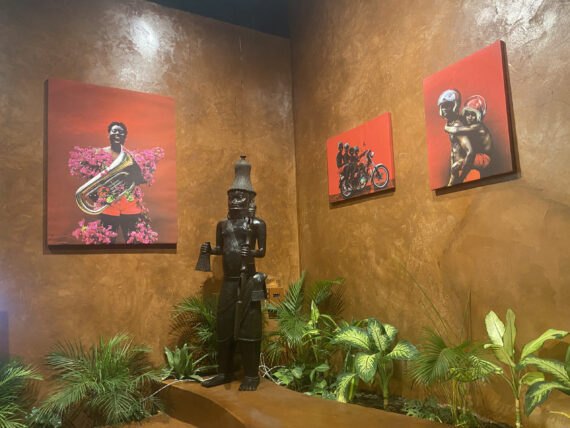
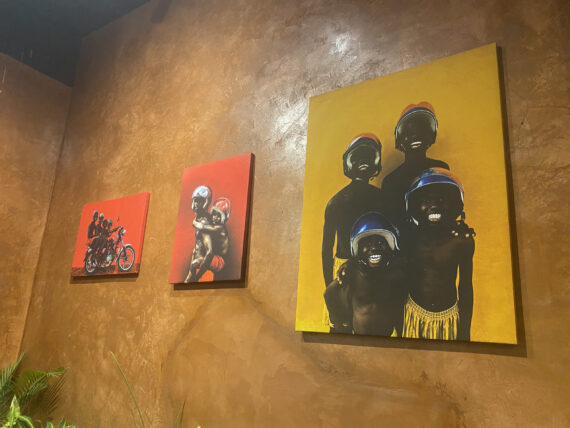
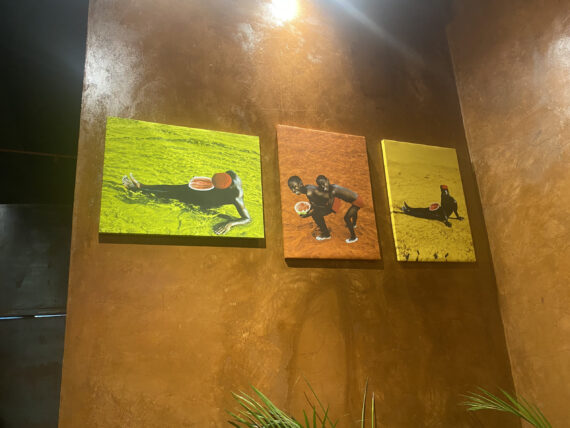
    An exhibition of photographs by Derrick Ofosu Boateng that are inspired by vibrant, vivacious and energetic scenes, is underway at the newly opened Amba Gallery in Accra.   

    Characterized by the richness and diversity of African culture - his photographs encompass lifestyles and manners while providing fresh impetus to day-to-day activities, which tend to attract and sustain the attention of viewers.  

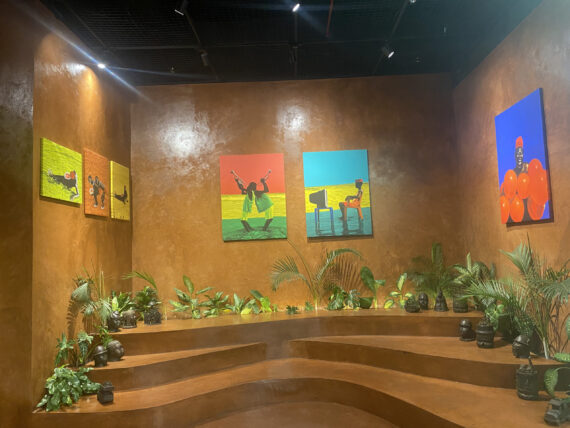
    With colourful backgrounds comprising reds, greens, golds, pinks and blues alongside calm seas, Boateng captures Africans with musical instruments, fruits, motor bikes, crash helmets, flowers, babies and television sets, which rebound into images of energy and hues.  

    While celebrating the black body through his photos, the young photographer aims at reversing stereotypes that define the African continent. Consequently, he effectively captures the beauty of Africa and its people in completely different settings.

    Curated by the South African anthropologist Lungi Morrison, Boateng unveils the hidden magnificence, creativity and traditions of Africa through glitzy pictures that transport ordinary people and places into colorized heights and pinnacles.  

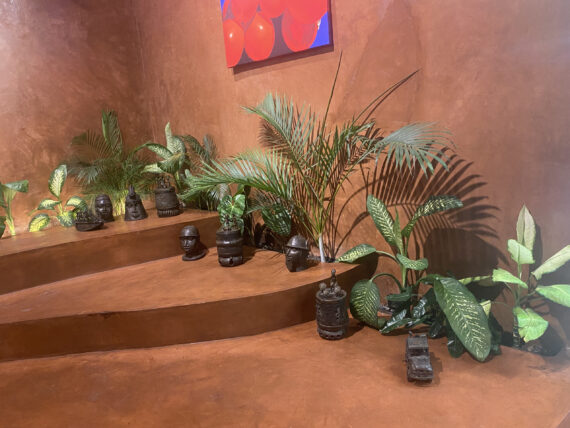
    Designed by Italian / Albanian architect Blerta Copa, Amba is the culmination of a vision to create a distinctively contemporary African gallery experience in contrast to what is a globally heuristic, when people think of an art gallery – ie white-walls and empty spaces.   

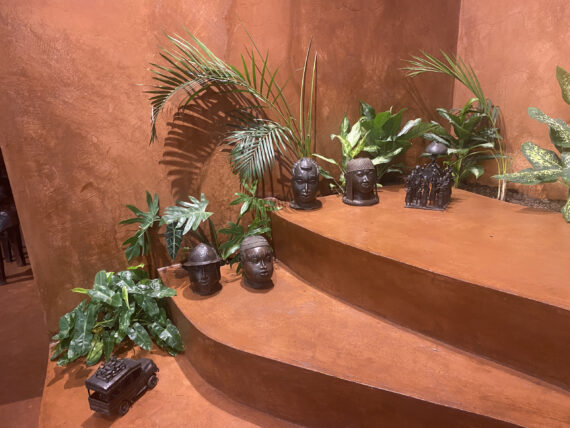
    Consequently, the gallery is designed with an amphitheatrical approach and raw earth finishing. Indeed, the architectural layout embraces both contemporary and vernacular designs, which enable the visitor to be met by an elevated circular podium and bronze pieces.

    Planned with the intent to exhibit, promote and educate diverse audiences about the provenance of African art history and design, the gallery will equally represent part of the vast Pan-African art collection of Amadu Baba, a Ghanaian businessman, art collector and founder of Amba Gallery.

    Titled “A New Decade”, the exhibition ends on Wednesday June 30, 2021.

    Read More »
  • Angelika Heis - strokes and colours tell stories

    June 19, 2021 • FeaturedArticle, News • 405

    By John Owoo

    (In Accra – Ghana)

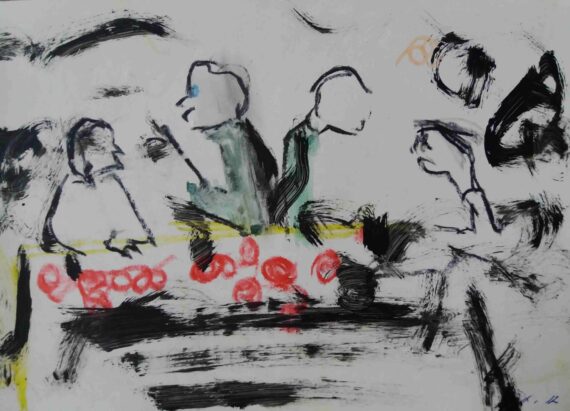
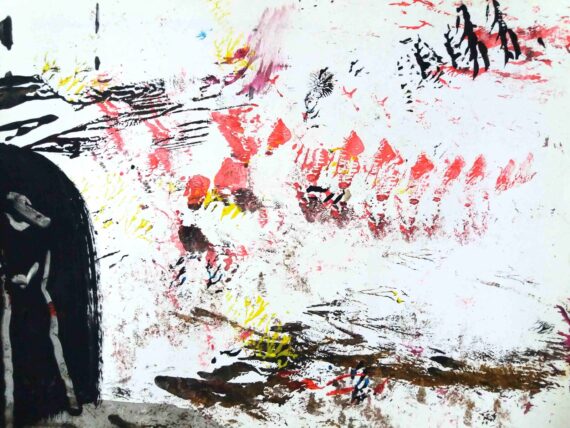
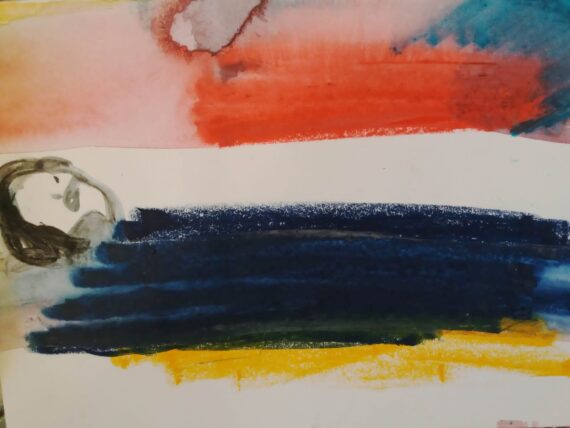
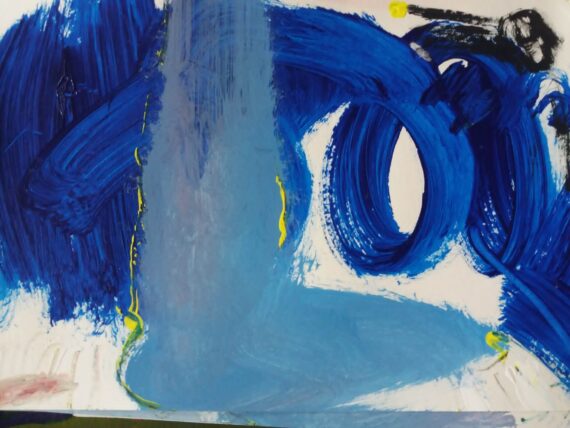
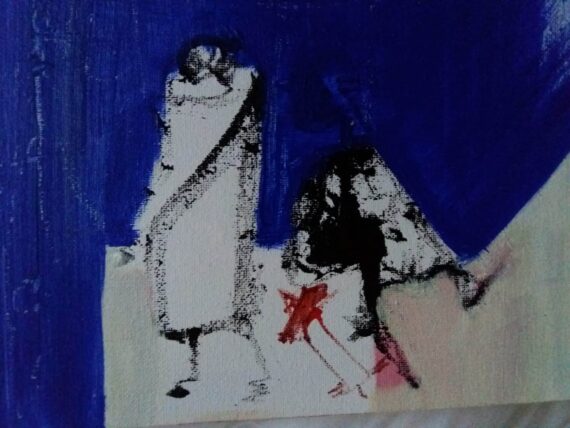
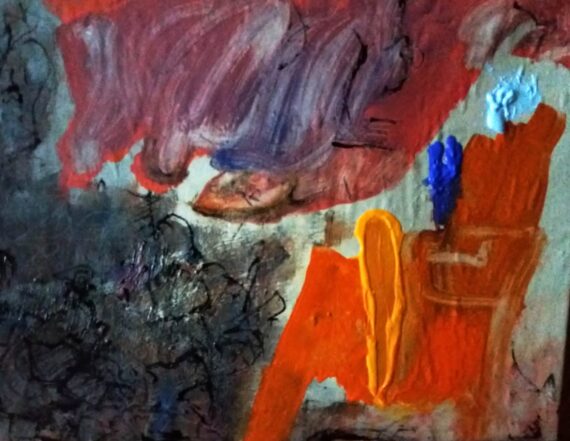
    Paintings by Austrian artist Angelika Heis are definitely not dogmatic and theoretical but rather encompass the basics of life – people, trees, tables, chairs and scenes from theatres, silent movies, dancing halls, parks and events.

    Largely a self-trained artist, Heis employs semi abstracts and abstracts in cool colours through acrylics, crayons and oil to paint images that stand at the interface of story-telling and abstract expressionism.

    Currently based in Vienna (Austria), her works are basically life experiences seen through her emotions - and these are characterized by splashes of cool colours, sharp and abrupt brush strokes - while allowing her creative instincts to generate further dynamism.

    Equally, bold brush strokes and dramatic colour schemes by Heis, expose her call for achievement while burying her messages in abstracts that appear so familiar yet very distant, confusing and probably alien.

    Heis, who comes from a large family of artists, has been painting since childhood. In recent years, one can notice a gradual change in her technique and colour quality, which attract and sustain the interest of viewers.

    She has exhibited in several venues in Austria and beyond. Recent exhibitions include “Art Aqua” (December 2020), “Transformation” (February 2021), Galerie Shop (May 2021) and another which ended last week at Josef Strasse in Vienna.

    Read More »
  • Slavery in retrospect at Gallery 1957

    June 13, 2021 • FeaturedArticle, News • 431

    By John Owoo

    (In Accra – Ghana)

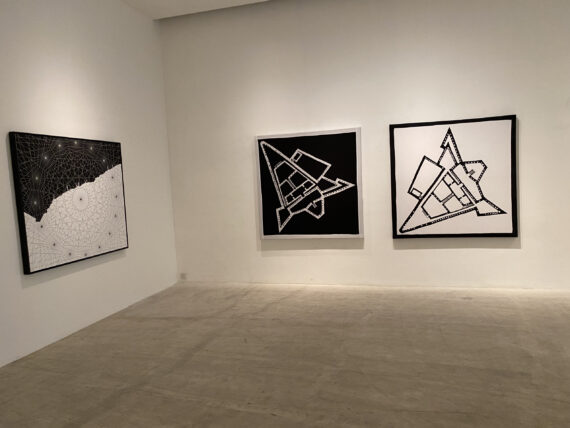
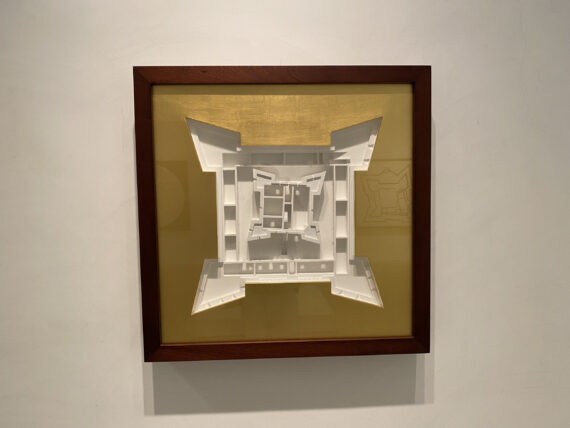
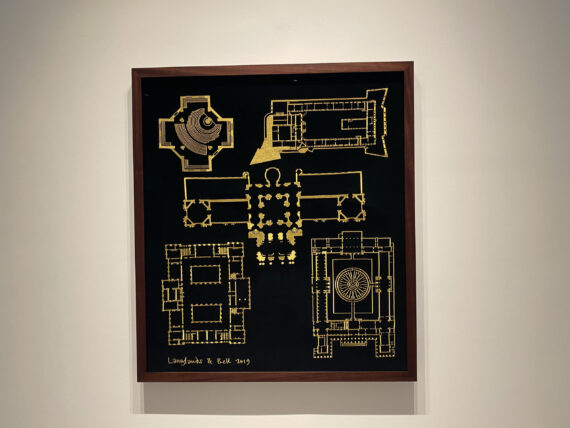
    An exhibition of works by two British artists, Ben Langlands and Nikki Bell that explore the complex web of relationships, which connect people and architecture is ongoing at the Kempinski Hotel in Accra.

    The artists, who have collaborated since they met in Art School in 1978, also employ coded systems of communication and exchange that has become a means of negotiation in a fast moving technological world.

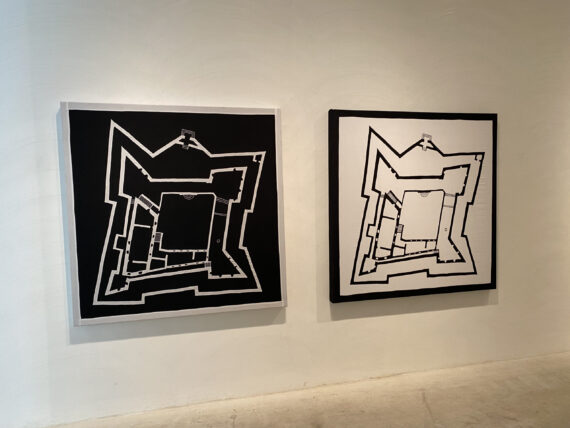
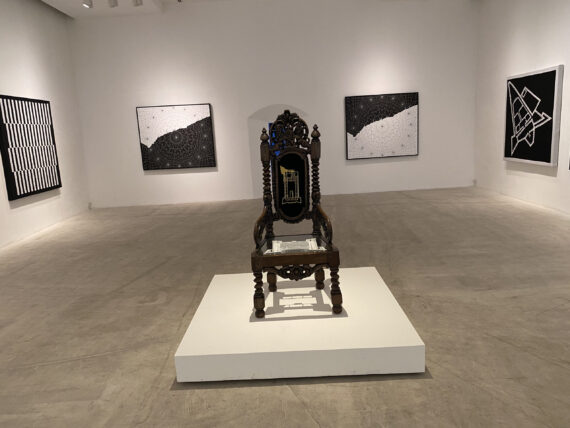
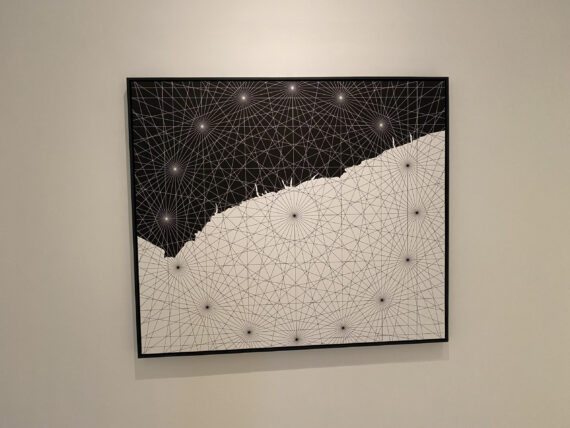
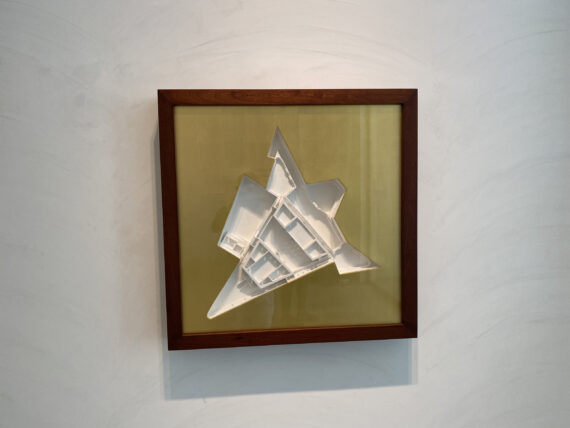
    Titled “The Past is Never Dead”, art pieces on display explored the architecture of Slave Castles and Forts in Ghana through a cool blend of slave boats, chairs, Asafo flags, dungeons, lines, geometric shapes and spider-web like images that remind us of the despicable nature of slavery.

    Through a sublime use of design, they capture castles and forts as places of torture and imprisonment while zooming on the fact that these structures have become monumental symbols of evil, malevolence and one of the worst crimes committed against humanity.

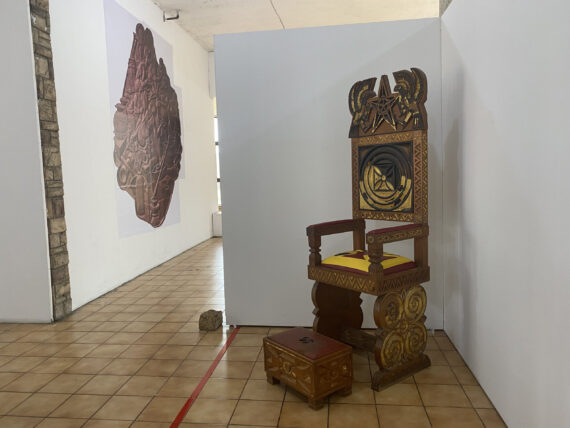
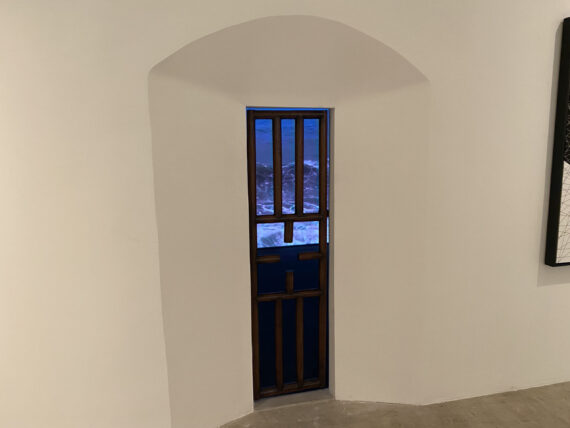
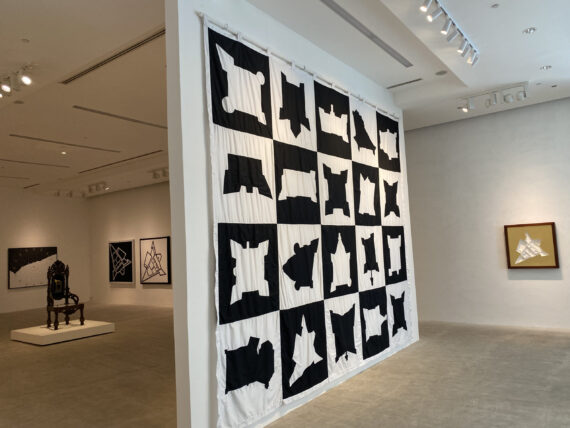
    Curated by Jonathan Watkins, the artists created a replica of the infamous “gate of no return” through a video installation while an elaborately carved state chair, which was used by the last Dutch governor of the Elmina Castle adorned the centre of the exhibition hall.

    The artists equally employed a gigantic Asafo flag on which they painted images of several forts - these include Amsterdam (Abandzi), Good Hope (Senya Bereku), Hollandais (Elmina), Nassau (Moree), Bateinstein (Butre), St. Sebastian (Shama), Orange (Sekondi), Metal Cross (Busua) and St. Anthony (Axim) alongside the Elmina Castle.

    The basic architectural design of these forts was in the form of simple shapes – squares and rectangles – and the outer components consisted of towers while the inner parts comprised two or three storey-buildings with or without towers and a courtyard.

    Langlands & Bell have shown internationally including Serpentine Gallery, Whitechapel Gallery, British Museum, Tate Britain, Tate Modern and V&A (United Kingdom), Kunsthalle Bielefeld, Haus Der Kunst, Hamburger Bahnhof (Germany), MoMA, Yale Center for British Art (USA), Venice Biennale (Italy), Seoul Biennale (South Korea) and CCA Kitakyushu / TN Probe (Japan).

    In 2002, they were commissioned by the Imperial War Museum in London (UK) to visit Afghanistan and research “The Aftermath of September 11 and the War in Afghanistan”.  The duo were nominated for the Turner Prize and won a BAFTA for “The House of Osama bin Laden”, a trilogy of artworks they made after their return to London.

    Major permanent art works in the public realm by Langlands & Bell include “Moving World” (2008, London Heathrow Terminal 5), “Call & Response” (2012, Porte de Vincennes, Paris) and “Beauty / Immortality” (2016, Piccadilly Circus Underground Station, London).

    Ghana (then known as Gold Coast) was the center of the British slave trade whose remnants are still visible today. During the period, American traders did business had trading posts in coastal towns and constructed Castles and Forts in Cape Coast, Elmina which were operated by the British, French, Dutch, Germans, Spanish and Portuguese.

    The exhibition ends on Friday July 2, 2021.

    Read More »
  • Intricate weaving / monochrome patterns encircle Nubuke

    June 6, 2021 • FeaturedArticle, News • 488

    By John Owoo

    (In Accra – Ghana)

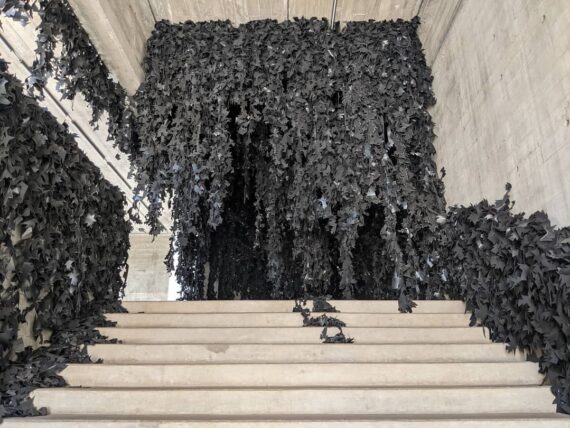
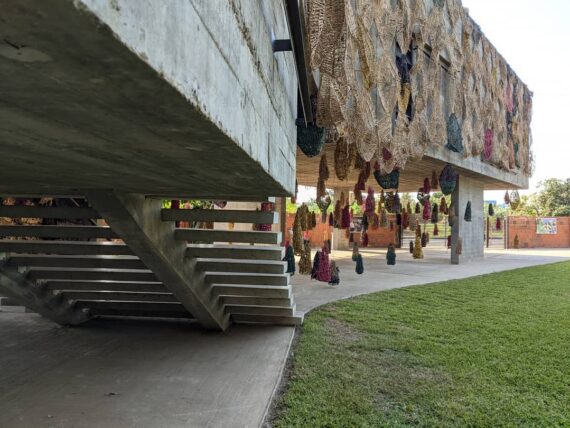
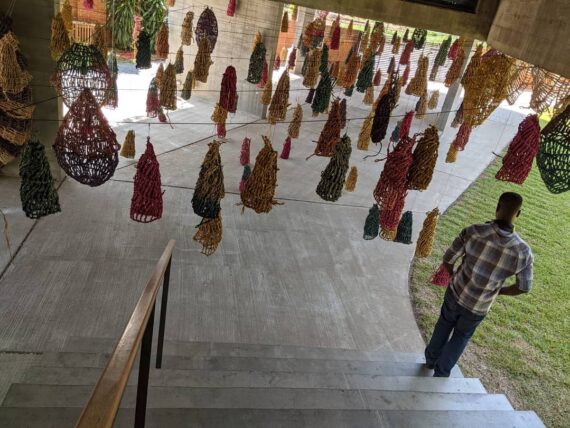
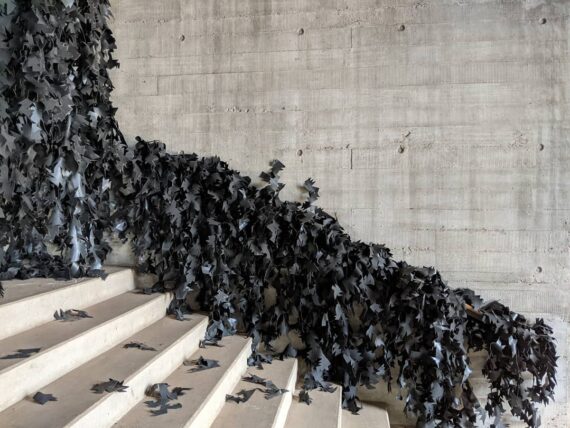
    Nubuke Foundation in Accra is currently hosting inventive artworks by two female artists -Lois Arde Acquah and Theresah Ankomah that re-index craft work and stretch intricate monochrome patterns.

    Both artists have over the years been generating emotions, liberating personal interrogations, encouraging solo and collective acts while asserting radical new approaches to contemporary art.

    Undeniably, they equally explore identity, self-expression, authenticity, geo-politics, trade and gender through a combination of diverse materials that recall the skills of ancient African craftsmen while opening up new paradigms of representation.

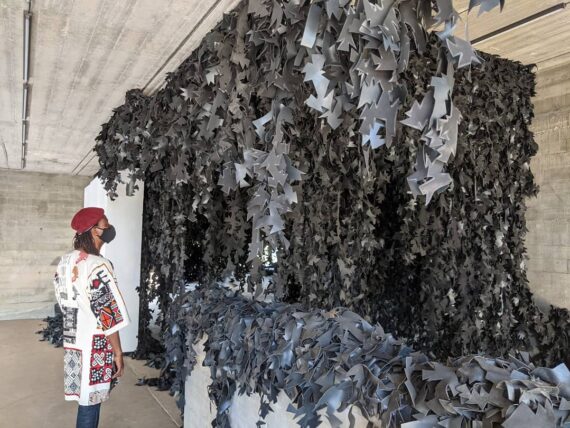
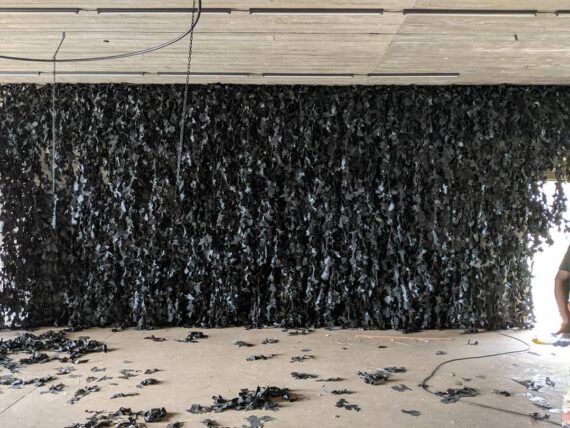
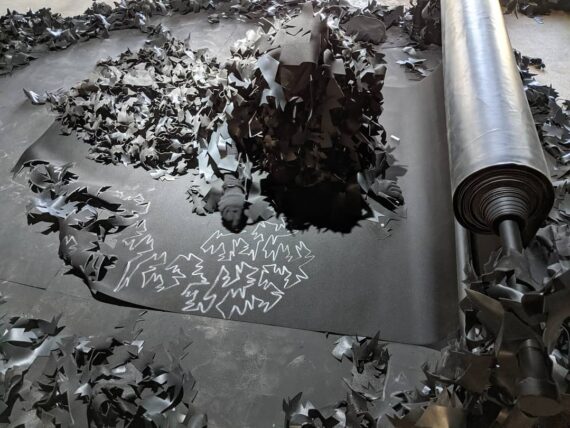
    Noted for hand drawings of intricate monochrome patterns on various surfaces to explore monotonous actions, Arde-Acquah created a pristine forest in the new gallery of the foundation. She cut “millions of soft black materials in similar forms, which virtually inundated the walls, ceiling, floors and staircases.

    In a performance that followed the opening ceremony, Arde-Acquah engaged art lovers present with diminutive movements which were replaced by hysterical movements and frenzied ones as she swirls and virtually drowns in swathes and mounds of synthetic leather.

    She placed herself under pressure, monotony and difficulty while posing many questions to viewers as they consciously or unconsciously joined in this vulnerable exercise that ended with the artist pushing herself to the limits of self-punishment.

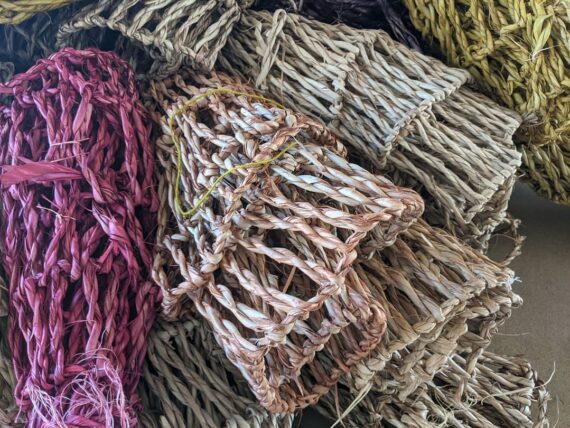
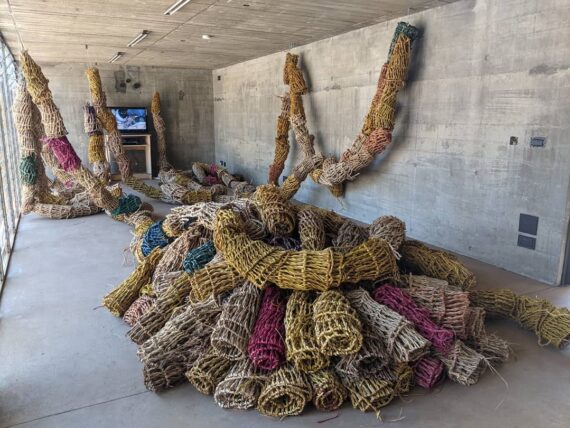
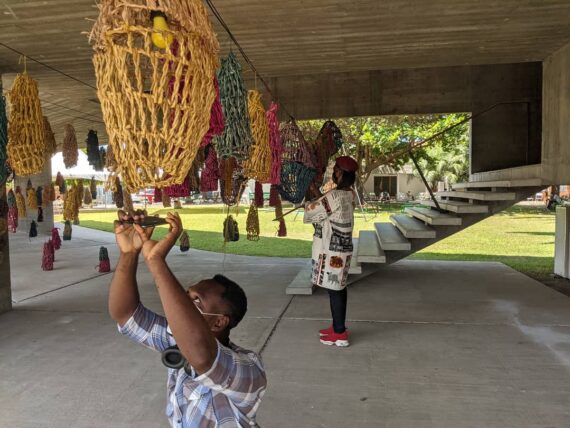
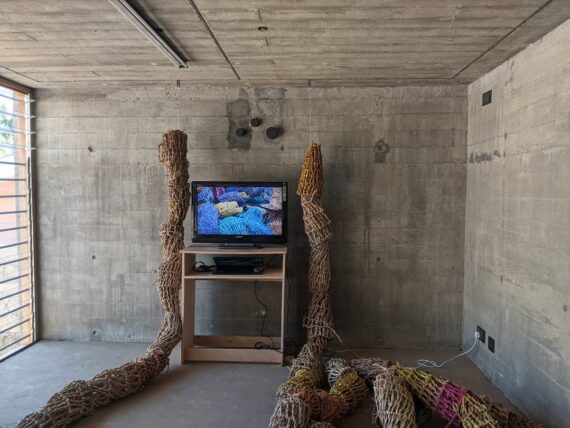
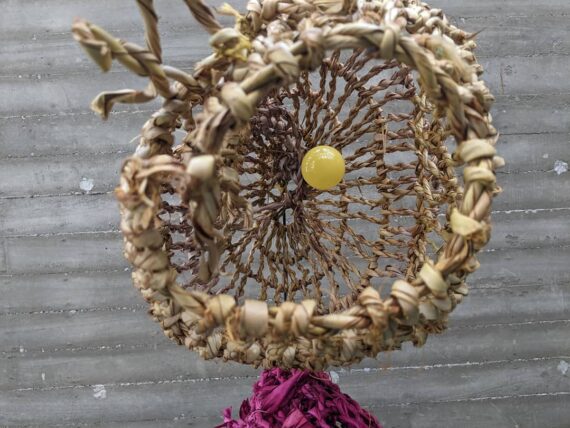
    Employing kenaf baskets from the onion traders at wholesale markets in Accra and elsewhere, Ankomah’s interaction with these materials and the ecosystems that produce them is an expedition that have been exploring gender issues, geo-politics, trade tensions and power.

    Her works are the direct result of a voyage of curiosity and exploration that are progressively evolving around the intricacies rooted within the weaving practice. Indeed, the process of creating complexities and exposing embedded meanings by the interlocking of raw materials enable her to transmit messages that are spearheaded by weaving.

    In recent years, her encounters with the public / installations explore the infinite possibilities of craft object and processes within a contextual discourse of dual-citizenship and cross-cultural relationship on the basis of trade.

    Titled “Look at We”, the exhibition ends on Sunday August 15, 2021.

    Pix - Elolo Bosoka

    Read More »
  • MST hosts politically-charged computer games

    May 30, 2021 • FeaturedArticle, News • 429

    By John Owoo

    (In Accra – Ghana)

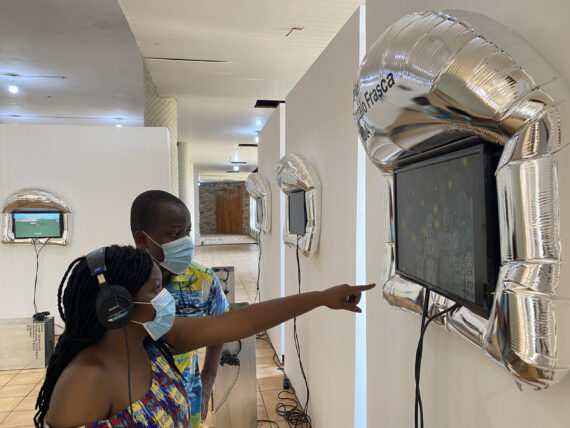
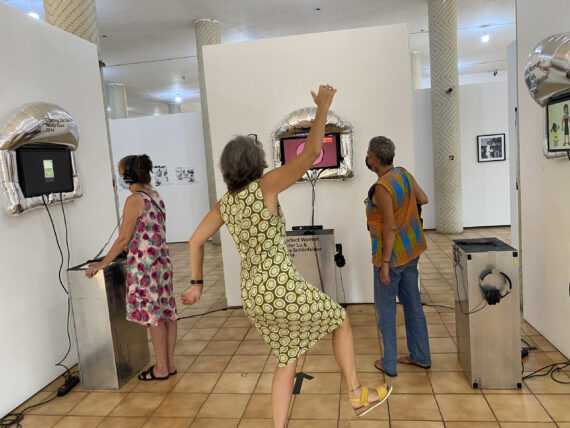
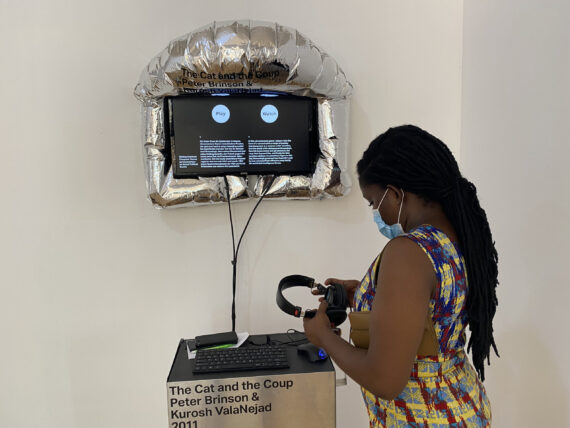
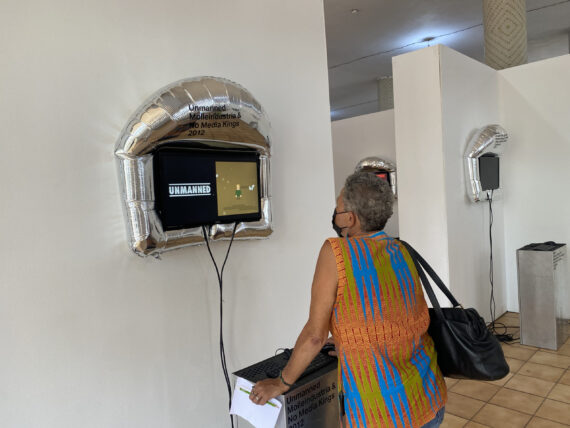
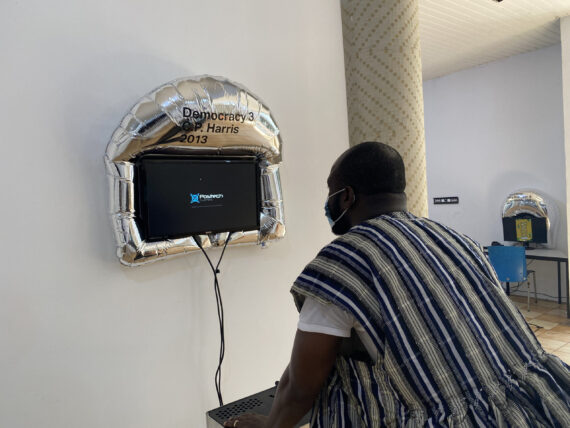
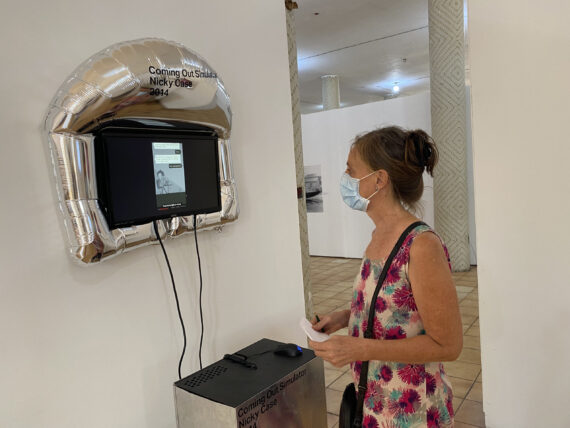
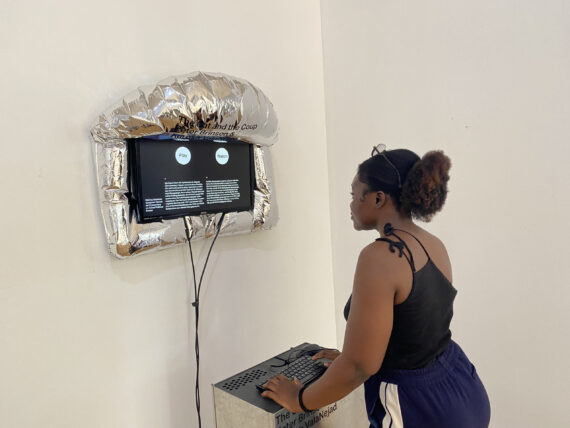
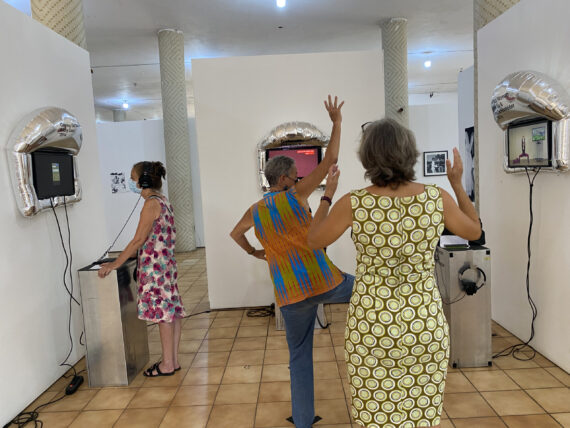
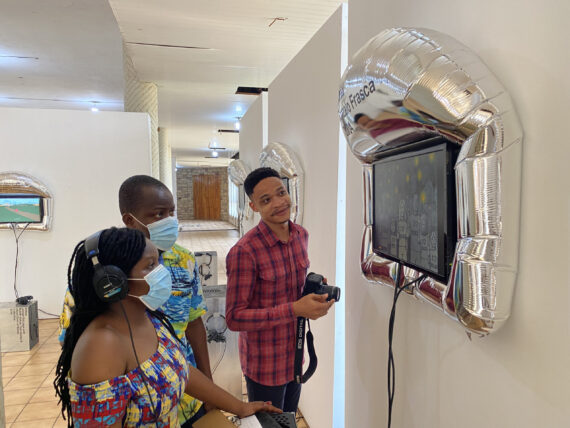
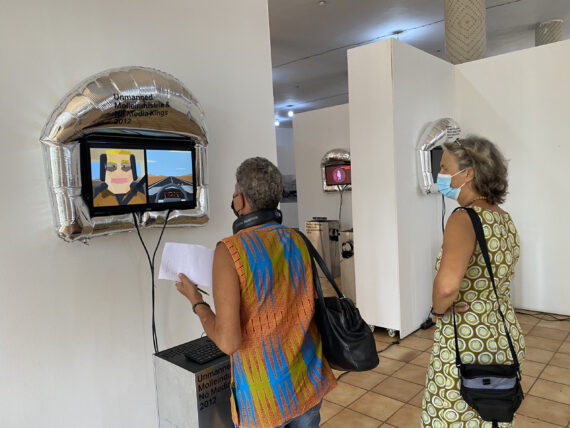
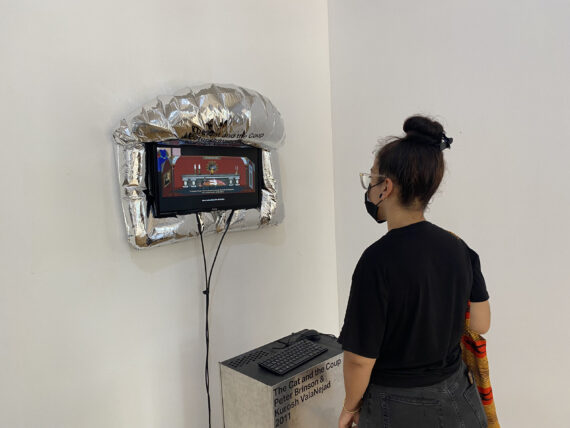
    A total of sixteen games and four videos that show the power of computer games as a politically and socially significant medium are currently on show at the Museum of Science and Technology (MST) in Accra.

    Set on twenty computers embellished with balloons, the exhibition equally examines how computer games unfold their political potential while conveying practical experiences and ideologues in an educational, populist or propagandist manner. 

    It explores the scope and limits of the computer game genre as it constructs a counter-position within the arts and entertainment industry. A move that is achieved through a subtle use of a repertoire of politically ambitious games from 2009.

    Indeed, visitors will become players and experience at firsthand how the games, which deal with topics such as media criticism, migration, power relations, gender roles and militarism on an artistic level affect them.

    Complemented by documentaries on the subject, the games make vivid allusions to political decisions alongside explicit illustration of social conditions and grievances including working conditions, gender, revolutions, refugees and authoritarian governments.

    Players of these games will experience political decision-making, social injustices, labor conditions, surveillance state tactics, consequences of armed conflicts and revolutions against totalitarian systems among others.

    A round table discussion on the exhibition comprising Rainer Hauswirth (former head of Visual Arts at the Goethe-Institut Headquarters in Munich, Germany), Afranie Akwasi Bediako (Artist) Francis Brown (Animator), Eyram Tawia (Computer Games Developer) and Prince Andrew Ardayfio (Gamification Strategist) will take place on Saturday June 5 at the MST in Accra.

    Information Technology Consultant, Kobby Spiky Nkrumah will moderate the discussion, which will among others focus on how computer games can be used as an artistic reflection of contemporary issues and its suitability for complex political themes.

    Goethe-Institut Ghana is sponsoring the exhibition, which ends on Saturday June 5, 2021.  

    Read More »
  • Dark skin and shady black strokes at Gallery 1957

    April 27, 2021 • FeaturedArticle, News • 589

    By John Owoo

    (In Accra – Ghana)

    Bold and stunning portraits by Holland based Ghanaian artist Lord Ohene Okyere-Bour that are reminiscent of black culture and power are currently on display at Gallery 1957 in Accra.

    Titled “Collecting Afro Memoirs”, the artist, who combines figurative and portraiture techniques, paints gallant and striking depictions, which he tags with beads and stones. Singularly and collectively, they forcefully tell the story of the black man and woman.

    He masterfully incorporates elements from life which are inspired by people and experiences of the past while providing hints of challenges and victories that are associated with life on earth. Indeed, Okyere-Bour appears to take the works beyond physical realism.

    Painted dark skin characterized by black shady strokes are embellished with Afro hair alongside facial expressions, style, patterns and clothe designs that contest and defy stereotypes surrounding black people.

    Indeed, Okyere-Bour’s paintings, which include nudes, are quite dynamic and tend to overwhelm the viewer through a blitz of cool colours, which inevitably enforce an incisive cultural reference and a sharp focus on identity - this he expresses through designs, hats and texts on T shirts.

    Undeniably, the artist makes a calculated appeal against the deterioration of pride and self-esteem of dark skinned people and calmly calls for an end to post-colonial indoctrination and respect for all cultures, beliefs and traditions.

    The exhibition ends on Thursday May 6, 2021.

    Read More »
  • Wishing Well installation unveiled in Accra

    April 13, 2021 • FeaturedArticle, News • 501

    By John Owoo

    (Accra – Ghana)

    A replica of a sculptural installation by Serge Attukwei Clottey, which is currently on show in Coachella Valley, California (USA) was recently put on show at La, a suburb of Accra that overlooks the Gulf of Guinea.

    Titled “Wishing Well”, the installation, which comprise cutting and stitching of yellow jerry cans (aka Kufour Gallons), the display forms part of a larger project dubbed “Afrogallonism”, which has persistently and consistently explored the relationship between these containers and consumption.

    The Wishing Well installation alludes to wells, which most rural communities in developing countries rely on for their daily activities while making subtle references to colonialism, global movements for environmental justice and the infamous practice of galamsey (illegal mining).

    Clottey, who works in a variety of media that cut across installation, sculpture and performance that deal with the broader influence of colonialism in Africa, equally elevates these jerry cans into a powerful symbol of Ghana’s informal economy and its classification by Bretton Woods institutions and commerce.

    Through a complex web of cutting, drilling, stitching and melting discarded jerry cans, Clottey’s sculptural installations are bold collections that also act as a means of analysis into the languages of form, constructs and abstraction.

    While upholding the status of plastic as an important artistic medium and provoking reflections about consumption patterns, his stunningly composed wall installations made up of plastic pieces and copper wires also make references to the issue of recycling.  

    Undeniably, Clottey’s artworks are transformed into the annals of cultural archives, which effectively recall the long drawn out period of water shortages that compelled the use of these cans.

    Read More »
« 1 2 3 4 5 … 29 »
Subscribe to Arts Ghana News

Enter your email address to subscribe. Receive notifications of new posts by email.

RECENT VIDEOS

Simple Slideshow

  • Alliance Française
  • Arterial Network

© 2022 Arts Ghana™

Website Developed by Creative Solutions